Route Optimization for Bakeries: How to Meet Same-Day Delivery Expectations Without Increasing Costs
Same-day delivery used to be a competitive advantage for bakeries, but it’s now a baseline expectation.
Grocery chains, cafés, supermarkets, and retail partners expect fresh products delivered on time at very specific times. When bakeries miss those windows, they risk:
- Product spoilage
- Lost shelf space
- Penalties
- Strained retailer relationships
For bakeries running tight margins, even small delays can turn into real losses. That’s why route optimization isn’t just a nice-to-have anymore. It’s part of staying competitive.
The reality of same-day bakery routes
Fresh products have a short shelf life. A truck that runs 30 or 40 minutes late might still deliver edible bread, but the selling window has already shrunk.
Most bakery routes deal with three everyday challenges:
1. Morning demand piles up
Many stores want their deliveries before the first rush. That compresses multiple stops into a short time frame.
2. Orders change at the last minute
A café might double its muffin order. A store might shift its receiving window. A custom cake might show up late in the schedule. These kinds of last-minute changes happen more often than not.
3. Stops are many and small
A single truck might hit 20 to 40 locations, each with slightly different rules.
Without a proper routing system, dispatch in same-day delivery becomes guesswork filled with phone calls and apologies.
Why route optimization matters for bakery deliveries
Bakery products have extremely short shelf lives. Bread, pastries, and specialty items start lose value within hours because of freshness loss and customer appeal.
Same-day bakery logistics must manage:
- Early morning routes
- Strict retail receiving windows
- High inventory turnover
- Perishable product prioritization
- Last-minute order changes
Without intelligent routing, even small delays can lead to spoilage, missing windows, or extra overtime.
What does route optimization mean for bakeries?
Route optimization is the process of automatically calculating and building the most efficient delivery routes taking real-world constraints into account.
For bakeries, this is also about protecting freshness, meeting tight delivery windows, and maximizing daily distribution capacity.
A proper system considers:
- Delivery locations
- Store time windows
- Real-time traffic
- Vehicle capacity
- Driver schedules
- Perishable product priority
Instead of just plotting stops on a map, it builds routes that are the most efficient for your business.
Route planning vs. route optimization
Route planning is simply deciding where the stops go.
Whereas route optimization is about sequencing those stops intelligently and adjusting them as conditions change.
For bakeries running dense, time-sensitive routes, that difference matters. A static plan can look perfect on paper and still fail once traffic, delays, or order changes hit.
Common challenges in bakery delivery operations
Even experienced bakery distributors struggle with inefficiencies in their routing.
1. Tight receiving windows
Missing a slot at a large retailer can throw off the entire route.
2. Manual route planning
Spreadsheets and static mapping tools lead to:
- Wasted miles
- Unbalanced routes
- Driver overtime
3. Traffic and road delays
Manual systems cannot adjust for real-time congestion or road closure.
4. Rising fuel and labor costs
Longer routes directly cut into margins.
5. Limited delivery visibility
Without GPS tracking, dispatchers cannot respond proactively to delays.
How route optimization helps bakeries meet same-day delivery expectations
1. Faster, more efficient routes
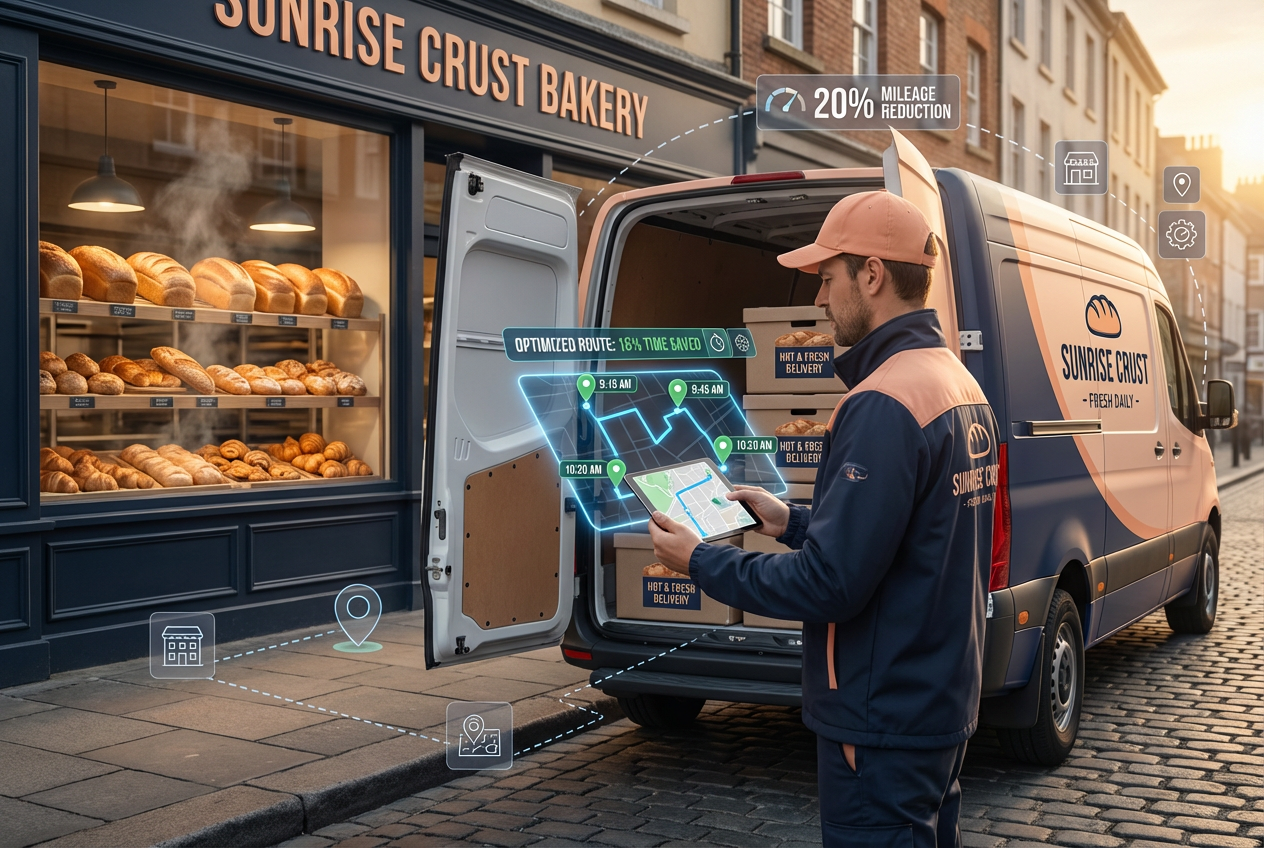
Optimized sequencing reduces travel time and improves route density. This usually means:
- More deliveries per truck
- Lower fuel usage
- Faster same-day fulfillment
2. Accurate time window management
Advanced bakery routing software automatically prioritizes strict retailer time windows. This capability is critical for direct store delivery operations as it prevents:
- Missed receiving slots
- Penalties
- Last-minute rerouting
3. Lower fuel and labor costs
Shorter, balanced routes mean:
- Drivers complete routes within scheduled hours
- Overtime drops
- Fuel use decreases
Most bakeries see transportation costs fall by 10-20% after switching to optimized routing.
4. Better fleet utilization
Bakery fleet optimization ensures improved profitability without expanding fleet size through:
- Proper vehicle assignment
- Balanced route loads
- Reduced idle trucks
5. Real-time visibility and tracking
Modern bakery delivery software provides:
- GPS tracking
- Delay alerts
- Dynamic rerouting
- Proof of delivery
- Mobile driver apps
This level of visibility helps prevent problems before they affect the customer.
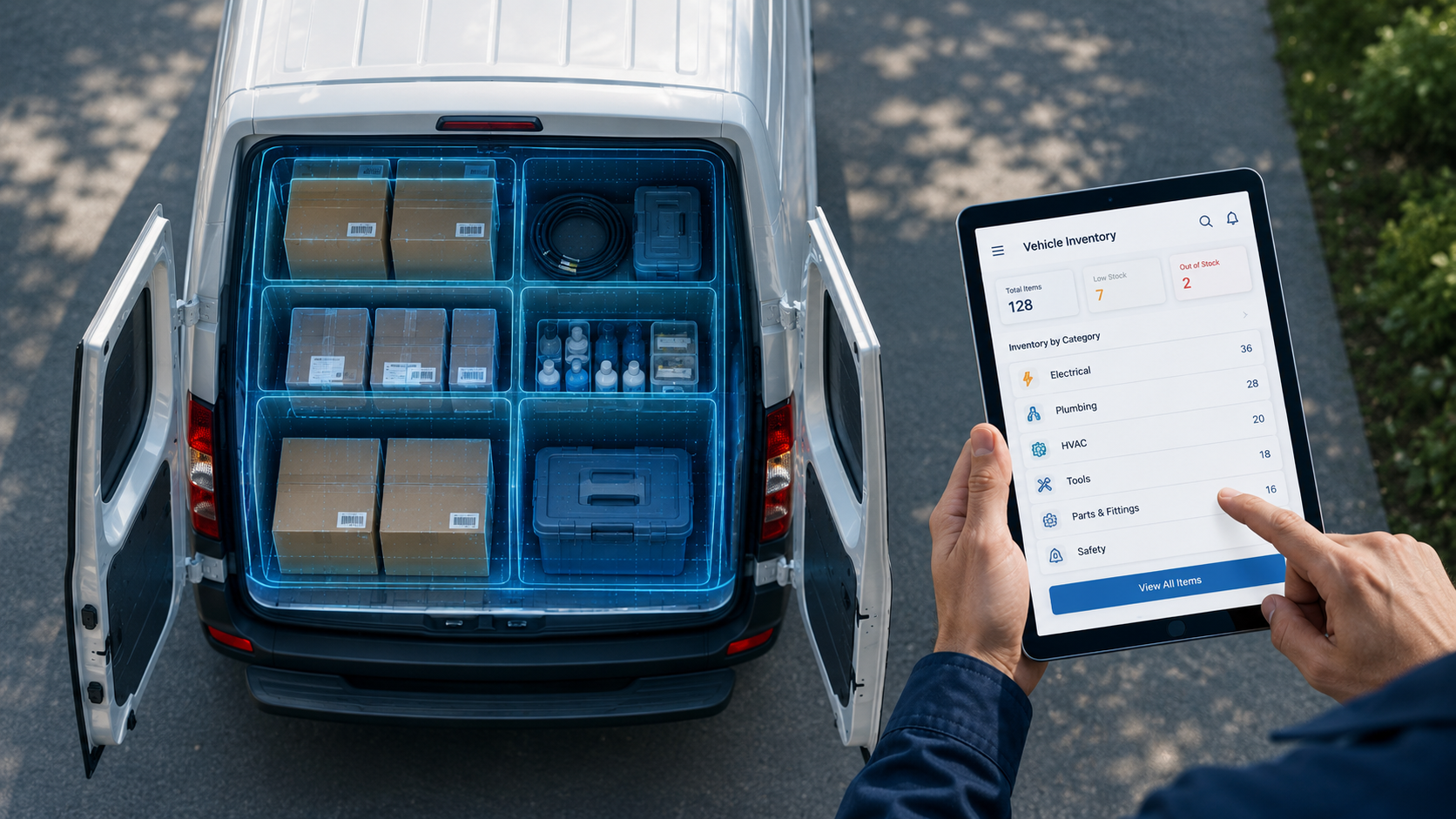
Systems like bMobile Route combine route optimization with mobile invoicing, real-time inventory, and proof of delivery, so both the driver and the office stay in sync throughout the day.
Why manual route planning breaks down as you grow
Spreadsheets and static route maps simply cannot:
- React to live traffic
- Prioritize perishable deliveries
- Adjust to same-day order changes
- Efficiently balance delivery loads across drivers
As delivery territories grow, manual routing becomes a serious operational bottleneck.
Route optimization for perishable food deliveries
Perishable goods require more than just the shortest route. Bakery logistics depend on:
- Fresh-first delivery sequencing
- Minimal dwell time at each stop
- Smart routing between locations
- Real-time schedule adjustments
Even a 30 to 45 minute delay can affect how fresh products look and sell on the shelf.
Optimized routing ensures time-sensitive products are delivered at the right moment, not simply by when it’s most convenient for the truck.
Key features to look for in bakery route optimization software
When evaluating a system, look for:
- Dynamic rerouting
- Automated time window enforcement
- Capacity-based route planning
- Proof of delivery
- Mobile driver apps
- Integration with DSD systems
- Order and inventory synchronization
- Delivery analytics dashboards
The best solutions support the full direct store delivery workflow, not just route maps.
A real-world bakery routing scenario
A mid-sized bakery delivering to 120 retail locations per day implemented route optimization.
Before:
- Frequent late deliveries
- Unbalanced workloads
- Rising fuel costs
After:
- 15% shorter routes
- 18% reduction in fuel expenses
- 25% improvement in on-time delivery
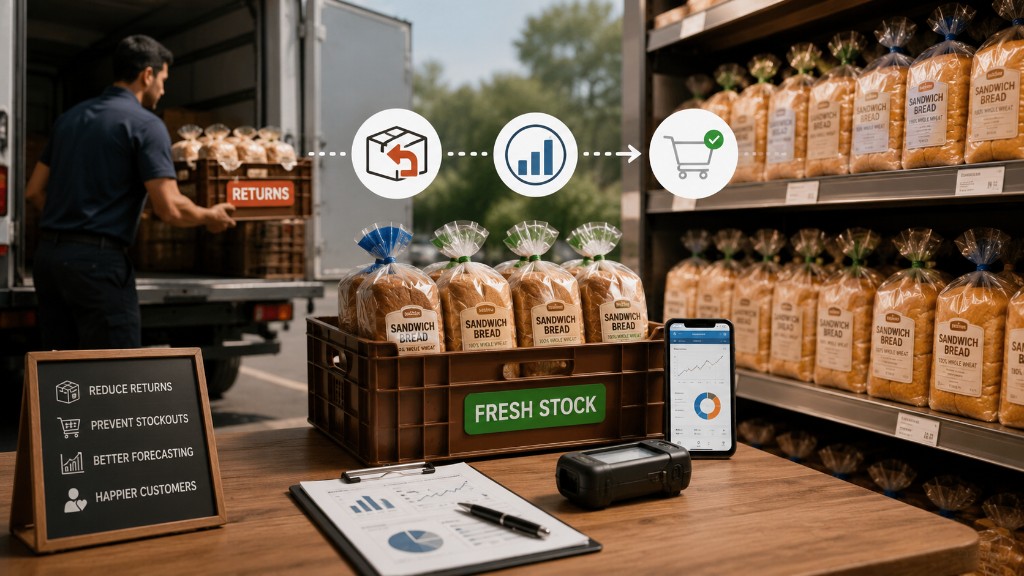
Retail partners reported fewer stock-outs and fresher shelves.
Choosing the right route optimization software for your bakery
When evaluating options, ask these questions:
- Does it support perishable food deliveries specifically?
- Can it integrate with your current order management system? If not, does it come with its own system and is it good?
- Does it offer mobile driver applications?
- Can it scale as your routes grow?
- Does it support full direct store delivery workflows?
The right system should make routes simpler and more efficient by a large margin.
Turn same-day delivery into a strategic advantage
For bakeries, delivery performance affects more than just logistics. It influences:
- Freshness perception
- Retail shelf space
- Retail relationships
- Profit margins
With the right route optimization system in place, bakeries can:
- Protect product freshness
- Increase on-time delivery rates
- Reduce fuel and labor costs
- Scale distribution efficiently
Investing in an intelligent bakery route optimization software like bMobile Route, you can transform same-day delivery from an operational challenge into a competitive differentiator.