The dairy industry relies on speed, freshness, and precision in dairy distribution operations. Whether it's delivering milk, yogurt, butter, or other dairy products, distributors must ensure products reach customers quickly while maintaining strict quality standards.
However, many dairy businesses still rely on spreadsheets, paper invoices, manual route planning, and disconnected systems. These outdated processes often lead to delivery delays, inventory losses, billing errors, and inefficient routes.
As demand for fresh dairy products continues to grow, distribution operations are becoming more and more complex. Businesses now need better tools to manage daily deliveries, optimize routes, track inventory, and communicate with drivers in real time. This is where dairy distribution software becomes essential.
Modern dairy delivery solutions like bMobile Route help distributors automate operations, improve delivery efficiency, reduce operational costs, and provide better customer service.
What is dairy distribution software?
Dairy distribution software is a specialized technology platform designed to help dairy businesses manage and automate their delivery operations. It supports activities such as route planning, driver management, inventory tracking, billing, and customer delivery scheduling.
This type of system acts as the operational backbone of a dairy delivery business.
Many companies also refer to it as:
- Dairy delivery software
- Milk delivery software
- Dairy route management software
- Milk distribution management system
These solutions streamline every stage of the delivery process from order management to final delivery confirmation.
For example, a milk delivery software platform can automatically assign daily delivery routes to drivers, track delivery progress, update inventory levels, and generate invoices without manual intervention.
By centralizing all operations in a single platform, dairy distributors gain better control over their logistics and customer service.
Why dairy businesses need distribution software
Dairy distributors face unique operational challenges compared to other industries, including perishable products, strict delivery windows, and routes that often change daily. Modern distribution software helps businesses overcome these challenges efficiently.
Manual operations vs digital distribution
Many dairy distributors still rely on manual processes such as paper delivery sheets, phone calls, and spreadsheets. These methods slow down operations and increase the risk of errors.
Digital distribution platforms automate these tasks, enabling businesses to:
- Plan routes automatically
- Assign deliveries to drivers
- Track delivery progress in real time
- Generate invoices instantly
Automation reduces operational complexity and allows businesses to scale faster.
Increasing demand for fresh dairy logistics
Consumers today expect fresh dairy products delivered quickly and consistently. Restaurants, grocery stores, cafés, and retailers rely heavily on consistent and timely dairy deliveries.
Without proper logistics software, meeting these expectations becomes difficult. Dairy logistics software helps distributors maintain reliable delivery schedules and ensure product freshness.
Rising fuel and labor costs
Fuel prices and labor costs continue to rise, making route efficiency more important than ever for dairy distributors.
Optimized routing software helps reduce:
- Unnecessary mileage
- Fuel consumption
- Driver overtime
This significantly lowers operational costs for dairy distributors.
Need for real-time delivery visibility
Customers want transparency in deliveries. They want to know:
- When deliveries will arrive
- If shipments are delayed
- When orders have been completed
Real-time tracking tools give businesses and customers visibility into delivery status, improving trust and customer satisfaction.
Key features of dairy distribution software
Modern dairy delivery software and dairy route management software provide a range of features designed specifically for dairy distribution operations.
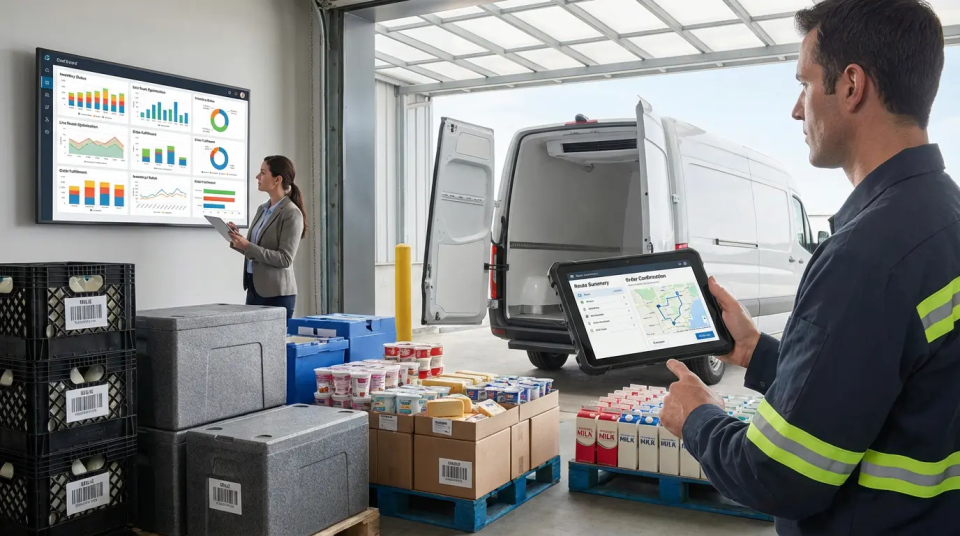
Route optimization for milk delivery
Route optimization technology automatically calculates the most efficient delivery routes using factors such as:
- Delivery locations
- Traffic conditions
- Time windows
- Vehicle capacity
This ensures drivers complete deliveries faster while reducing fuel costs.
Mobile delivery apps for drivers
Driver mobile apps allow drivers to manage deliveries directly from their smartphones or tablets.
Drivers can:
- View assigned routes
- Update delivery status
- Capture digital signatures
- Record proof of delivery
This eliminates paperwork and keeps operations synchronized in real time.
Customer subscription management
Many dairy businesses operate on subscription delivery models, especially, for residential milk delivery services.
Subscription management features allow companies to:
- Manage recurring orders
- Schedule daily or weekly deliveries
- Handle pauses or changes in subscriptions
This improves operational efficiency and customer convenience.
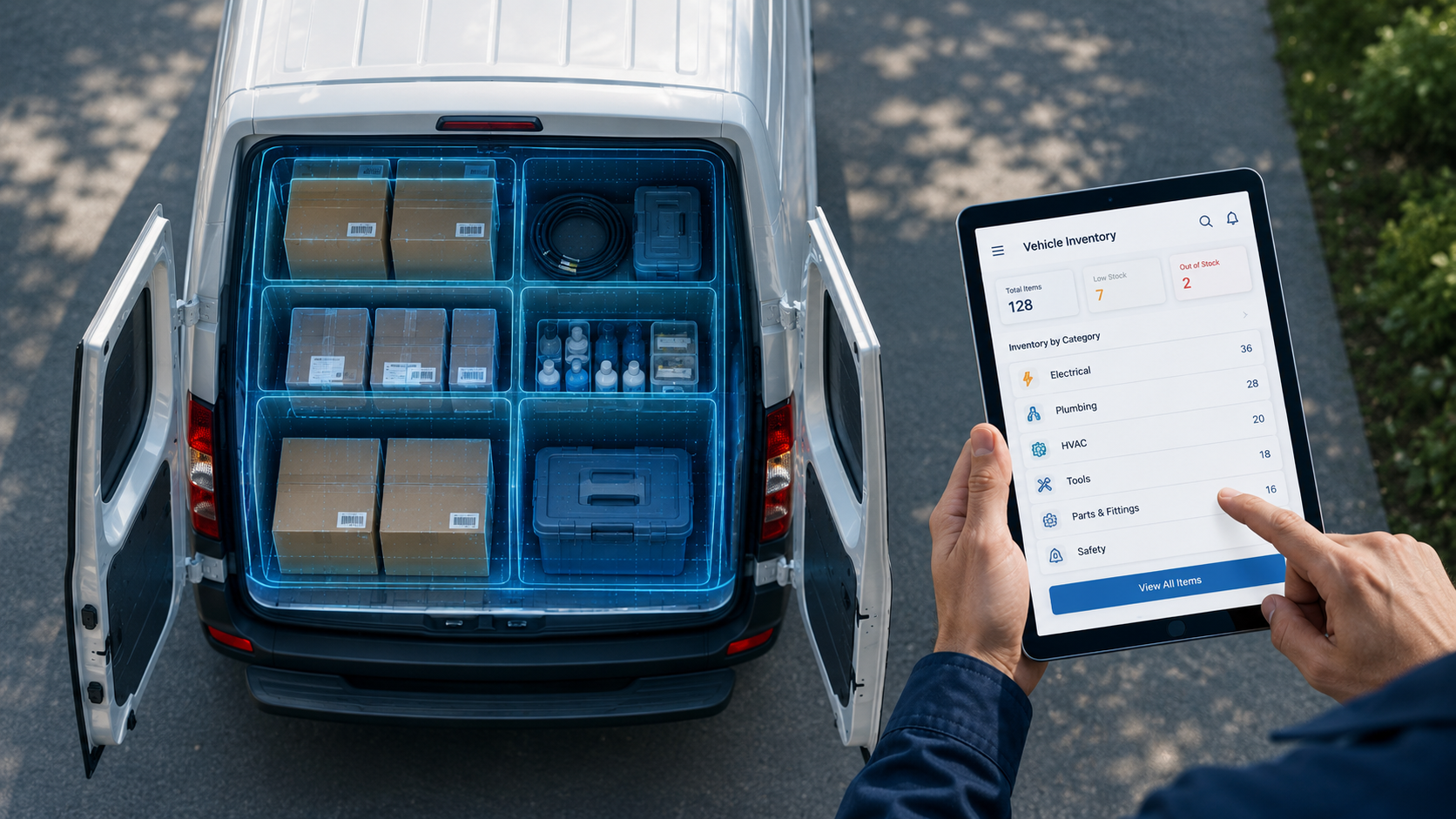
Inventory tracking for dairy products
Dairy products have limited shelf life, making inventory tracking crucial.
Inventory management tools help businesses:
- Monitor stock levels
- Track product movement
- Reduce wastage
- Maintain proper stock rotation
This ensures freshness and prevents overstocking.
Automated billing and invoicing
Manual billing processes are one of the most common sources of operational errors.
Automated billing systems generate invoices based on:
- Delivered quantities
- Subscription plans
- Pricing agreements
Invoices can be generated instantly and shared digitally with customers.
Real-time delivery tracking
Real-time delivery tracking allows dispatchers and customers to monitor deliveries as they happen.
Businesses can track:
- Driver locations
- Delivery completion times
- Route progress
- Delays or issues
This transparency improves operational control.
Analytics and performance reporting
Data-driven insights help dairy distributors make smarter decisions.
Advanced analytics provide reports on:
- Delivery efficiency
- Driver performance
- Route profitability
- Customer demand trends
These insights help businesses optimize operations and improve long-term growth.
Common challenges in dairy distribution
Dairy distribution involves complex logistics that can create several operational challenges.
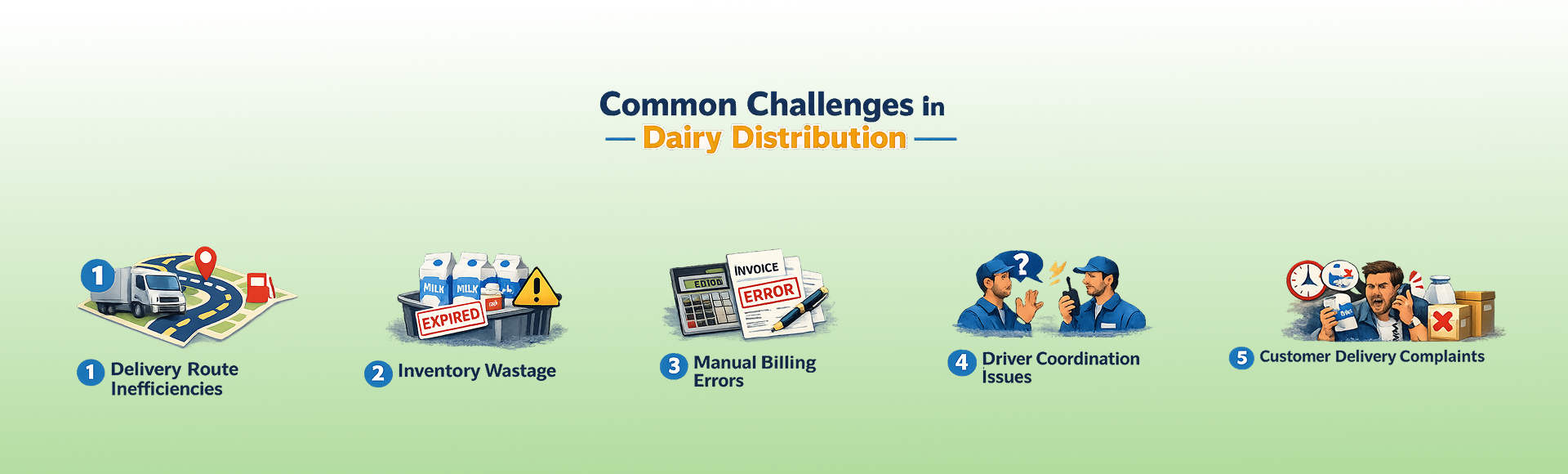
Delivery route inefficiencies
Without optimized routes, drivers may travel longer distances than necessary, increasing fuel costs and delivery times.
Inventory wastage
Dairy products have limited shelf life. Poor inventory tracking often leads to expired products and unnecessary waste.
Manual billing errors
Paper-based billing systems can result in calculation errors, missing invoices, and delayed payments.
Driver coordination issues
Managing multiple drivers without a centralized system can lead to communication gaps and delivery delays.
Customer delivery complaints
Late deliveries, incorrect orders, or lack of communication can negatively impact customer relationships.
How dairy distribution software improves operations
Implementing dairy distribution software significantly improves operational efficiency.
Key benefits include:
- Automated route planning
- Reduced fuel and operational costs
- Faster delivery times
- Accurate billing and invoicing
- Real-time delivery tracking
- Reduced paperwork and manual administration
- Better visibility into delivery performance and profitability
- Improved driver coordination
- Better customer service
By digitizing the entire distribution process, dairy businesses gain greater visibility and control over their logistics operations.
Who should use dairy distribution software
Dairy distribution software is designed for businesses that manage recurring deliveries of fresh dairy products.
It is commonly used by:
- Local milk delivery businesses
- Dairy wholesalers and distributors
- Dairy product manufacturers
- Grocery supply distributors
- Farm-to-home milk delivery services
- Food service distributors delivering dairy products
Any business handling frequent dairy deliveries, strict delivery schedules, and perishable inventory can benefit from specialized dairy delivery management software.
How to choose the best dairy distribution software
Selecting the right software solution is essential for long-term operational success.
Here are some key factors to consider.
Scalability
Choose a system that can grow with your business. The platform should support increasing delivery volumes, additional drivers, and expanding delivery zones.
Mobile app capabilities
Drivers should be able to manage deliveries easily using mobile apps. Features such as navigation, delivery confirmation, and route updates are essential.
Route optimization features
Advanced route optimization helps reduce travel time and fuel costs while improving delivery efficiency.
Integration with ERP and accounting systems
The software should integrate seamlessly with existing systems such as:
- Accounting software
- ERP platforms
- CRM tools
This ensures smooth data flow across the entire organization.
Ease of use for drivers
Drivers should be able to use the system without extensive training. A simple and intuitive interface ensures faster adoption.
Why modern dairy businesses choose bMobile
Modern dairy distributors are increasingly adopting specialized delivery platforms like bMobile Route to streamline delivery operations.
The system offers powerful features tailored specifically for dairy distribution, including:
- Smart route optimization
- Driver mobile apps
- Automated invoicing and billing
- Real-time delivery tracking
- Inventory visibility
- Advanced analytics
By using a unified delivery platform like bMobile Route , dairy businesses can improve operational efficiency, reduce delivery costs, and provide better service to their customers.
Future trends in dairy distribution technology
Technology continues to reshape dairy logistics and distribution.
Some emerging trends include:
AI-powered route optimization
Artificial intelligence will further improve route efficiency by predicting traffic patterns and dynamically optimizing delivery routes.
IoT-enabled cold chain monitoring
Sensors will help track temperature conditions during transportation to ensure dairy product quality.
Predictive demand forecasting
Advanced analytics will allow dairy businesses to forecast demand and optimize production and inventory levels.
Autonomous delivery technologies
In the future, autonomous vehicles and drones may assist in last-mile delivery operations.
These innovations will make dairy distribution more efficient, reliable, and cost-effective.