Dollars
-3%
$3,200 to $3,090
Looks like a slow month


Accounts rarely quit. They fade.
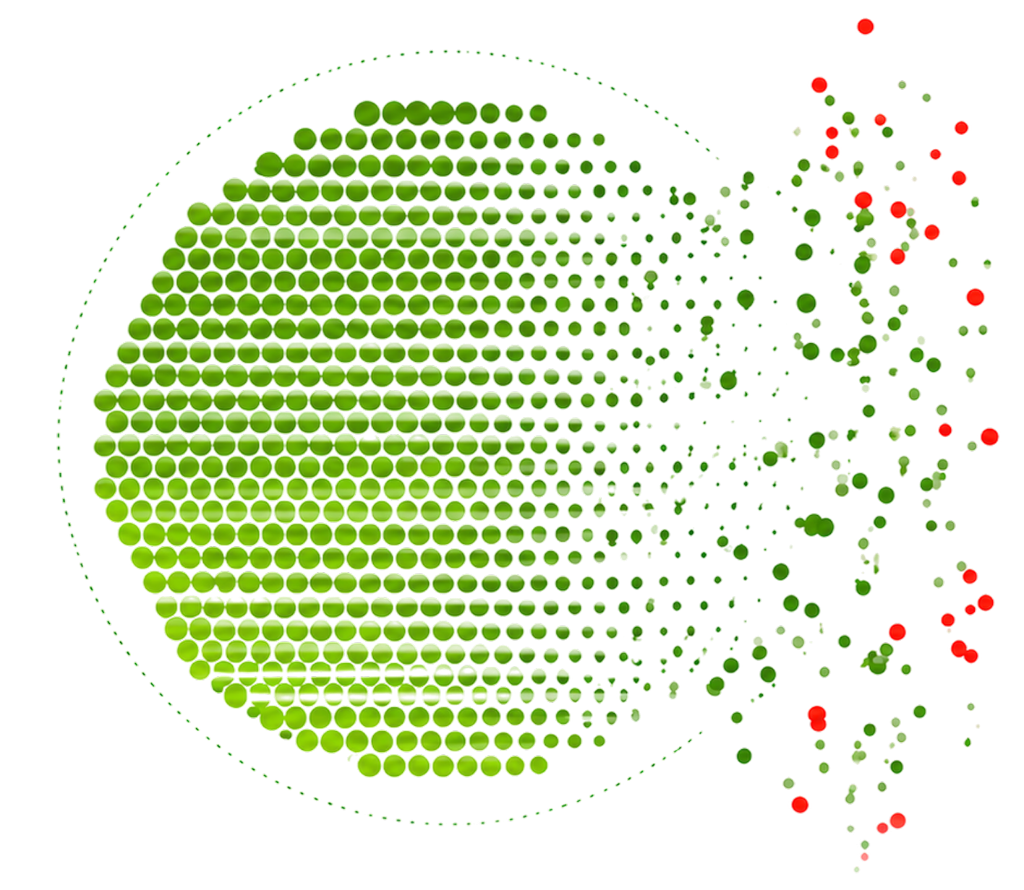
Think about the last account you lost. It probably did not end with an angry phone call. First the store stopped taking one or two items it had bought from you for years. Then the order got a little smaller. Then one morning your driver walked in and found someone else's product sitting where yours used to be.
Accounts rarely quit. They fade. And the fade shows up in your order history months before anyone says goodbye.
That gap creates an opportunity for competitors. They don't need to win the entire account. They just need to supply the items you're missing.
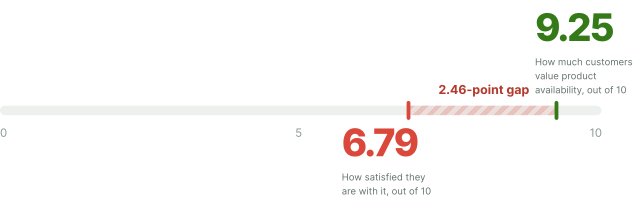
McKinsey's 2026 survey of 599 distribution customers found they expect three things from a distributor: the product in stock, a delivery that is right, and pricing they can understand. The lowest price was not one of them. Reliability is what earns their loyalty.
So stores rarely leave a family distributor over a few cents. They leave over small misses that pile up, like an item short two weeks in a row or a truck that ran late with no call. Each miss sends the store manager looking for a backup. The backup gets one item. If they deliver, they get the next one.
Most owners never see it coming because their totals hide it. A new account on the route covers the drop, and so do the price increases passed on this year. A store buying 8% fewer cases at 5% higher prices looks almost unchanged in dollars. And the fading rarely happens in the top 20 accounts the owner knows by heart. It happens in the other 150.
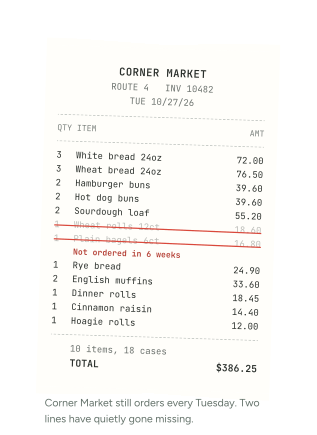
Illustration: Corner Market, last 8 weeks vs the 8 weeks before
Dollars
-3%
$3,200 to $3,090
Looks like a slow month
Cases
-8%
160 to 147
Real volume walking out the door
Items ordered
12 to 10
2 items dropped
Two items now on someone else's truck
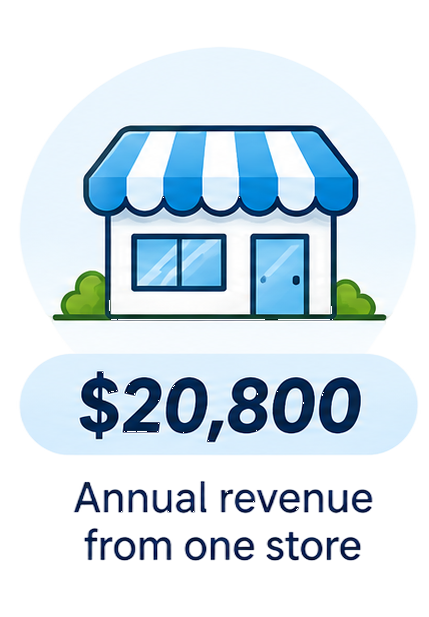
Sources: McKinsey, Where Value Is Won and Lost in Distribution (2026); Distribution Strategy Group (2026)
Eric Christiansen
Senior Software Consultant, bMobile Route Software
I spend a good part of my week on calls with distributors, and one request comes up again and again: show me which customers have gone quiet. Not the ones who closed. The ones still buying from us, just less.
They are hard to spot because a fading account does not set off any alarm. It still orders. It still pays. The driver still stops there every Tuesday. What changes is the shape of the order, and nobody is watching the shape.
The first item to go is the real signal.
When a store drops an item it has carried for years, it has usually not stopped selling it. Someone else is supplying it. That first item is the competitor's foot in the door, and it is the cheapest moment you will ever have to win it back.
Count cases along with dollars.
Price increases over the last year have hidden a lot of lost volume. If you only watch revenue by account, a store buying 10% fewer cases looks like it just had a slow month. Cases and item counts tell you what is really going on.
Pay attention when store managers change.
A new store manager inherits your relationship but none of your history. If nobody from your side walks in and introduces themselves, the competitor who does starts that relationship instead. Watch for orders that start coming every ten days instead of every week. That stretch is usually the gap someone else is filling.
My recommendation
“Which ten accounts bought fewer cases in the last eight weeks than in the eight weeks before, and which items did each one stop ordering?”
If your business is seasonal, compare against the same weeks last year. Then skip the "Is everything okay?" visit. Ask something specific:
“I noticed you stopped taking the wheat rolls. What happened?”
A specific question gets an honest answer, and a store that feels noticed rarely leaves. When your orders, items and deliveries live in one system, that list should take a minute to pull, not an afternoon with three spreadsheets.
Featured article by Eric Christiansen
Why every delivery should leave behind a record you can actually read, account by account.
Read the full articleA store that can top up its order from a phone is far less likely to call someone else when it runs short.
Read moreWhere margin slips away in a DSD operation, and how account-level visibility brings it back.
Read moreThank you for reading this edition of DSD Dispatch. Run the eight-week check this week and see if any name on that list surprises you.
Your turn
Think of an account you lost. Looking back, what was the first sign?
Tell us in the comments.
Share this with your route managers and drivers. They walk into these stores every week and are often the first to notice something has changed.
Until next time, watch the orders that shrink, not just the ones that stop.
