Direct store delivery software is a platform that manages the complete workflow of delivering products straight to retail locations from order capture and route planning through proof of delivery and payment collection all in one connected system.
Modern distribution teams are moving toward unified platforms instead of disconnected tools. If you're evaluating solutions, you should explore how a complete direct store delivery software platform connects orders, routes, inventory, and payments in one system.
When orders, inventory, and routes live in separate tools, small errors compound fast. A missed order change becomes a misload, which becomes a short shipment, which becomes a credit memo and an unhappy customer. This guide covers how DSD software works, what features matter most, and how to evaluate solutions that fit the way distributors actually operate.
What is a direct store delivery software?
Direct store delivery software is a platform that helps distributors deliver products straight to retail stores, skipping traditional distribution centers entirely. In simple terms, it's the system that connects everything between taking an order and collecting payment route planning, inventory counts, delivery confirmation, and invoicing; all in one place.
Think of it like the central nervous system for your delivery operation. Instead of using separate tools for orders, warehouse picks, driver routes, and accounting, DSD software ties all of that together so each step automatically updates the next.
Here's what a typical DSD platform handles:
- Order capture: Taking sales, returns, and credits right at the customer's location
- Route planning: Building stop sequences based on inventory, delivery windows and geography
- Inventory tracking: Showing real-time counts on trucks and in the warehouse
- Proof of delivery: Recording signatures, photos, and timestamps at each stop
- Payment collection: Processing cash, check, or card payments on the spot
You'll also hear terms called 'DSD solution' or 'route sales software.' It’s just different names for the same type of product that helps provide distributors visibility from warehouse to shelf without any manual handoffs that slow everything down.
How the direct store delivery process works
The DSD workflow follows a predictable sequence. Each stage depends on accurate data from the step before it, so when something breaks early a wrong count, a missed order change the problem travels all the way through the day.
Step 1. Schedule and receive orders
Orders come into the system from a few different places. Some arrive as pre-orders from sales reps who visited accounts earlier in the week. Others are standing orders that repeat on a set schedule. And some get entered by drivers at the shelf during delivery.
Once an order is confirmed, it moves to the warehouse for picking. The order details like customer name, products, quantities, and delivery window, travel with it automatically, so the warehouse team doesn't have to re-enter anything.
Step 2. Plan Routes and Load Trucks
Next comes route optimization. The software builds daily stop sequences based on delivery windows, traffic patterns, how close stops are to each other, and how much the truck can carry.
Trucks get loaded in reverse stop order, meaning the first delivery goes on last. This sounds like a small detail, but it prevents drivers from digging through the truck to find the right pallet at each stop.
Step 3. Deliver and Collect Payment
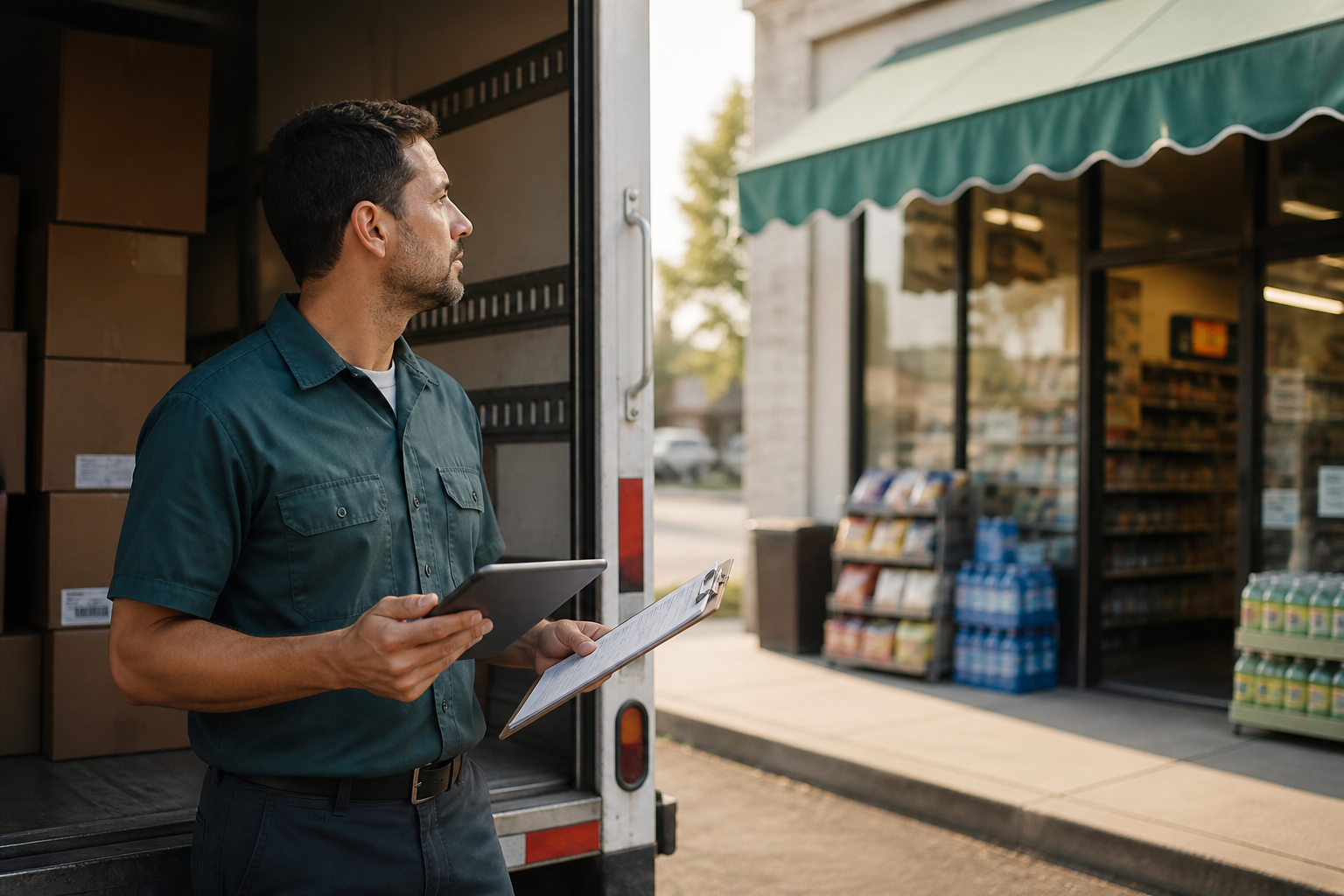
At each location, the driver confirms what was delivered, captures a signature or photo, and handles any returns or adjustments. If the customer pays on delivery, the system records the payment type and amount right there.
This is where mobile DSD software earns its keep. Drivers can complete all of this on a handheld device, even when cell signal is weak or nonexistent.
Step 4. Sync Data and Settle Routes
After the route wraps up, delivery data syncs back to the office. Inventory counts update automatically, payments post to accounts receivable, and any discrepancies get flagged for review.
This final step called route settlement closes the loop between what happened in the field and what shows up in the books.
Key Features of DSD Software for Distributors
A complete DSD solution bundles several modules that work together. Here's what each one does.
Order Management
Order management handles sales, returns, credits, and adjustments. Drivers or sales reps enter orders at the shelf, and those orders flow directly into the fulfillment queue for same-day delivery.
- Single workflow that eliminates duplicate entry
- Field orders flow directly to the warehouse without re-keying
- Supports credits, returns, and adjustments at the point of delivery
Warehouse Management
Warehouse management supports scan-based processes from receiving through truck loading. Pickers scan items as they pull them, and loaders scan again as pallets go onto trucks.
- Two-step verification catches misloads before trucks leave the building
- Scan-based receiving reduces intake errors
- Load confirmation tied directly to the day's route manifest
Inventory Management
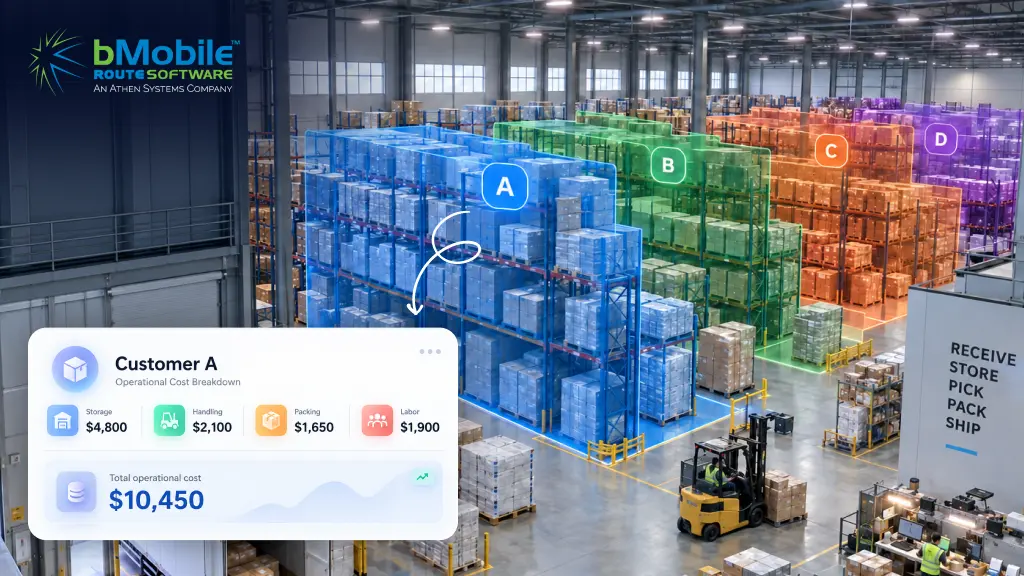
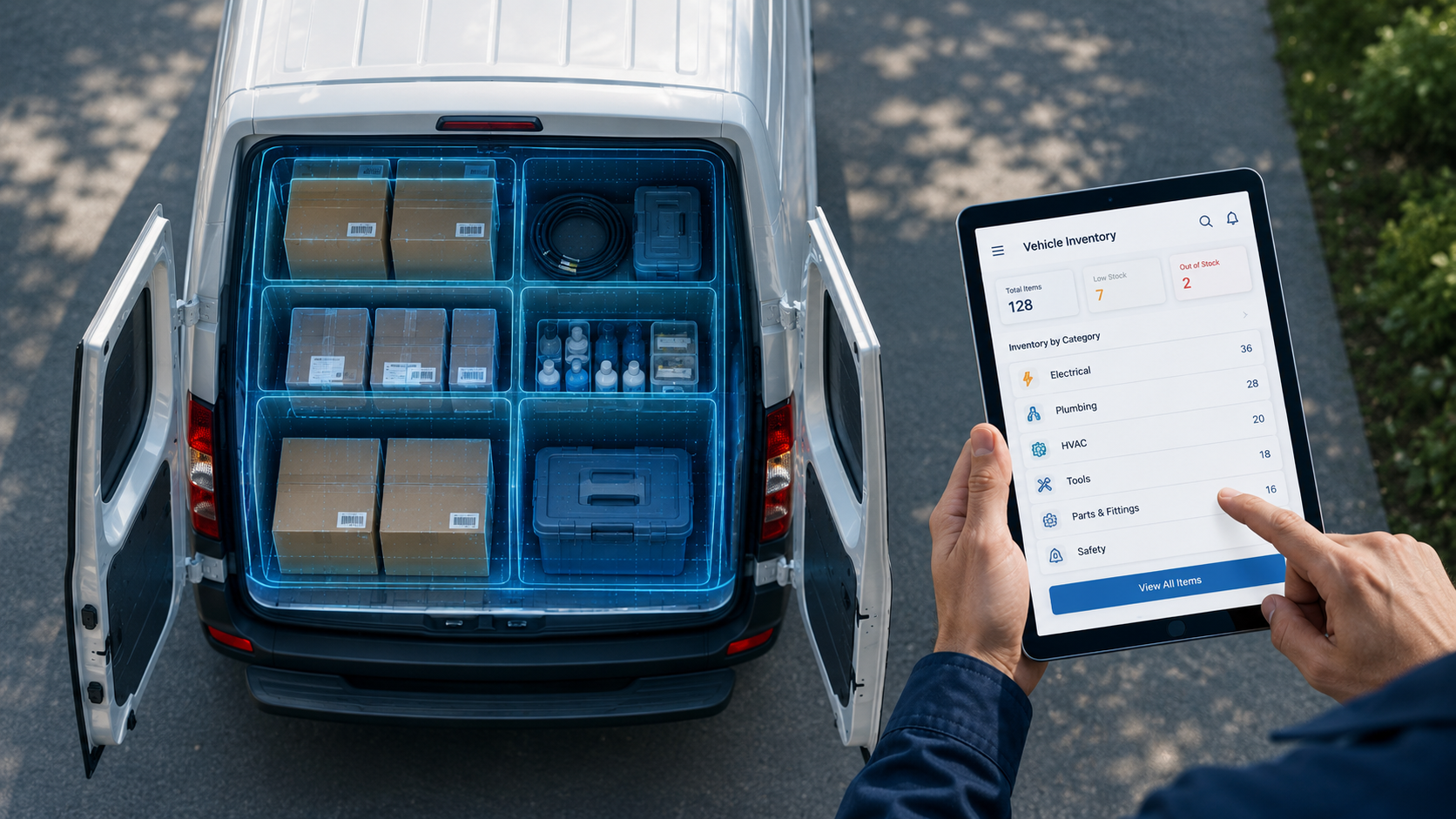
Inventory management shows live counts across warehouse and truck locations. Auto-reorder points help prevent stockouts, while load limits keep trucks from carrying more product than they can realistically sell.
- Real-time visibility across warehouse and all active trucks
- Auto-reorder triggers prevent stockouts before they happen
- Load limits matched to route capacity and historical sell-through
Route Management
Route management builds daily stop sequences that factor in traffic, delivery windows, and load size. The better systems use optimization algorithms to trim miles and fit more stops into each route.
- Fewer miles mean lower fuel costs
- More stops per route means more revenue per driver
- Dynamic re-routing handles same-day changes without manual rebuilds
Proof of Delivery
Proof of delivery (POD) captures electronic signatures, photos, and GPS-stamped timestamps at each stop. This documentation protects the business against disputes and creates an audit trail for compliance.
- Electronic signatures replace paper invoices
- Photo capture documents product condition at delivery
- GPS timestamps verify arrival and departure times automatically
- Often a contractual requirement for distributors serving large retailers
Payment Collection
Payment collection lets drivers process cash, check, or card payments on-site. The payment posts immediately, which speeds up cash flow and reduces the time between delivery and deposit.
- On-site payment processing shortens the order-to-cash cycle
- Supports cash, check, and card in a single workflow
- Payments post to accounts receivable in real time
Why DSD Software Improves Distribution Operations
The benefits show up in daily work, not just quarterly reports. When orders, inventory, and routes are connected, teams spend less time fixing problems and more time serving customers.
- Better accuracy: Scan-based workflows catch errors before trucks leave
- Faster fulfillment: Orders flow to picking without manual re-entry
- Real-time visibility: Managers see truck locations, delivery status, and inventory as it happens
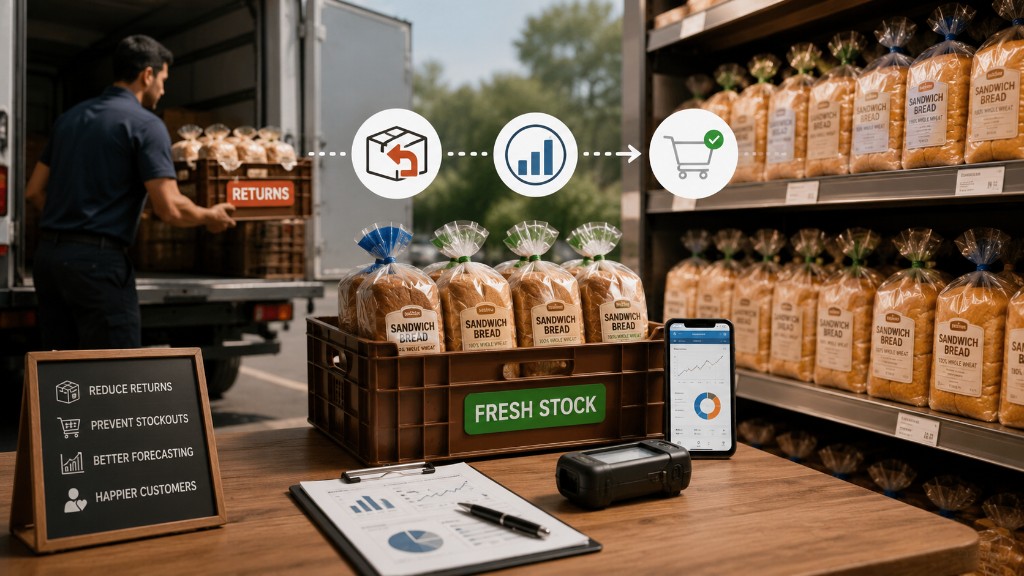
- Fewer returns: Accurate orders and proper rotation reduce spoilage and rejections
- Faster cash collection: On-site payments shorten the order-to-cash cycle
- Lower route costs: Optimized sequences reduce miles, fuel, and overtime
Benefits & Challenges of Direct Store Delivery
Understanding both sides of DSD helps distributors set realistic expectations and build operations that hold up under daily pressure.
Benefits of Direct Store Delivery
Faster time to shelf
- Products move from distributor to store shelf without stopping at a distribution center
- For perishables and time-sensitive items, this speed directly affects product freshness and shelf life
- A bakery route that delivers daily keeps stales low in a way that warehouse-based distribution simply cannot match
Stronger retailer relationships
- Drivers and sales reps visit accounts on a consistent schedule, building familiarity with store staff and managers
- Regular presence creates opportunities to spot merchandising issues and negotiate shelf placement
- Distributors can respond to out-of-stock situations before a competitor steps in
Better inventory visibility
- Because distributors control the last mile, they have real-time data on what's selling, what's sitting, and what needs rotating
- This visibility feeds directly into more accurate ordering
- Reduces both over-stocking and stockouts at the store level
Higher revenue per stop
- Drivers who can take orders at the shelf not just deliver what was pre-sold can capture incremental sales
- Seeing an empty display or a promotional opportunity in person is more effective than any order forecast
- On-site order capture means no missed upsell opportunities
Reduced damage and shrink
- Fewer handoffs mean fewer opportunities for product to be mishandled
- When a distributor controls the full journey from warehouse to shelf, accountability is cleaner
- Product condition is easier to maintain and easier to dispute when issues arise
Challenges of Direct Store Delivery
High operational complexity
- Managing dozens of routes, hundreds of accounts, and thousands of SKUs requires tight coordination across warehouse, dispatch, and field teams
- When any one piece breaks a misload, a missed delivery window, a payment dispute the ripple effects touch the entire day's operation
- Complexity grows faster than headcount as route counts increase
Driver dependency
- DSD operations rely heavily on individual drivers who know their routes, accounts, and customers
- High turnover creates training costs, service inconsistencies, and temporary drops in route efficiency
- Recovery from driver loss can take weeks, especially on dense or high-volume routes
Cash handling risk
- Routes that collect payment on delivery introduce cash management complexity
- Tracking payments by driver and reconciling end-of-day deposits requires disciplined processes
- Discrepancies that go undetected compound quickly across multiple routes
Technology adoption gaps
- Moving from paper-based workflows to a mobile DSD platform requires training and change management
- Drivers accustomed to handwritten invoices or phone-based communication can resist new systems
- Slow adoption delays the efficiency gains the software is supposed to deliver
Fuel and vehicle costs
- Running a dedicated fleet is expensive fuel, maintenance, insurance, and driver wages add up quickly
- Low stop density on certain routes makes per-delivery costs climb fast
- Rising fuel costs hit DSD operations harder than warehouse-based models because last-mile trips cannot be consolidated
Scalability limits
- Adding new accounts or expanding territory requires adding routes, trucks, and drivers in proportion
- Unlike centralized distribution, DSD scales linearly with headcount and assets
- Tight margins can constrain growth when each new route requires significant upfront investment
Balancing the Trade-offs
The economics of DSD favor operations where delivery frequency, product freshness, and shelf presence directly drive revenue.
Good fit categories:
- Bread, dairy, beverages, and snacks have high-frequency perishables where freshness drives repeat business
- Products where shelf presence and rotation require hands-on attention at the store level
- Categories where driver relationships translate directly into placement and promotional support
Harder fit categories:
- Products where delivery frequency is low and a distribution center model is more cost-effective
- Categories where margins are thin enough that route costs outpace the revenue benefit
The right software reduces operational drag without changing the underlying structure:
- Scan-based loading catches misloads before trucks leave the warehouse
- Mobile apps eliminate paper invoices and speed up payment collection
- Route optimization trims miles without sacrificing service levels
- Each improvement chips away at the challenges while preserving what makes DSD worth doing: direct control from warehouse to shelf
Mobile Direct Store Delivery Software Capabilities
Mobile functionality separates modern DSD software from older desktop systems. Drivers spend their day on the route, so the software has to work wherever they are.
Offline and airplane mode
Drivers can complete deliveries, capture signatures, and collect payments without a cell signal. Data stores locally on the device and syncs when connectivity returns.
- Critical for rural routes where cell coverage is unreliable
- Handles deliveries inside buildings where reception is spotty
- No data loss everything queues and syncs automatically
iOS and android apps
Cross-platform availability means drivers can use company devices or their own phones.
- Reduces hardware costs and makes onboarding faster
- Familiar interface reduces training time for new drivers
Real-time data sync
When connected, orders, inventory changes, and payments update across field and office within seconds.
- Dispatchers see delivery progress as it happens
- Warehouse teams can adjust picks based on actual sales
- Office staff can respond to customer inquiries with live delivery data
GPS and route tracking
Geo-fencing captures arrival and departure times automatically, which feeds into payroll and performance tracking.
- Live location visibility helps dispatchers respond to delays
- Enables stop reassignment when routes run ahead or behind
- GPS data supports mileage reporting and driver accountability
DSD route accounting software
Route accounting is the financial reconciliation that happens after each route. It answers a straightforward question: did the driver return with the right amount of cash, product, and paperwork.
End of day reconciliation
At the end of each route, the system compares expected values based on loaded inventory and recorded sales against what actually came back. Variances get flagged before the route closes.
Driver settlement
Driver settlement closes out each driver's account for the day. This includes verifying cash deposits, processing card batches, and documenting any inventory discrepancies.
Cash and credit tracking
The system tracks payment types by route and customer, which simplifies bank deposits and financial posting. This detail also helps spot patterns like customers who consistently pay late or routes with higher cash handling errors.
Types of direct store delivery solutions
Not all DSD software is built the same way. The right choice depends on existing systems, budget, and how complex the operation is.
Standalone DSD route sales software
Point solutions focus on route execution stop sequencing, proof of delivery, and driver invoicing. They work well for simpler operations but typically require integration with separate accounting or ERP systems.
DSD modules within ERP systems
Large ERPs like SAP and NetSuite offer DSD add-ons that connect directly to financial and inventory modules. However, these can be complex to configure and expensive to maintain, especially for mid-size distributors who don't have dedicated IT teams.
Unified DSD platforms
All-in-one platforms bundle route, order, inventory, warehouse, and accounting into a single subscription. This approach eliminates integration complexity and gives teams one source of truth across the operation.
DSD Software vs Alternatives
DSD Software vs ERP vs Route Optimization Tools
| Feature | DSD Software | ERP Systems | Route Optimization Tools |
|---|---|---|---|
| Route planning | |||
| Inventory tracking | |||
| Mobile-first | |||
| Payment collection | |||
| Proof of delivery |
While ERP systems handle accounting and route optimization tools focus on navigation, direct store delivery software connects the full delivery workflow from order capture and inventory tracking to proof of delivery and payment collection.
This unified approach reduces manual errors, improves visibility, and allows distributors to manage operations more efficiently compared to using disconnected systems.
If you're evaluating options, see how a complete direct store delivery software platform works in real-world distribution.
Industries that use DSD software
DSD is most common in industries where freshness, delivery frequency, and shelf presence matter.
- Bread and bakery distribution: Daily delivery cycles, shelf-life tracking, and freshness dating make bakery distribution demanding. DSD software helps manage rotation and reduce stales.
- Snacks and confections distribution: High SKU counts and frequent promotions require flexible pricing and merchandising support at the shelf.
- Coffee and beverage distribution: Route density, equipment servicing, and consignment of inventory tracking are common requirements.
- Dairy and perishables distribution: Cold chain compliance, expiration management, and FIFO rotation are critical for dairy distributors.
How to Choose the Right DSD Solution
When evaluating options, focus on how well the software supports actual workflows and not just have a heavy feature checklist.
- ERP and accounting integration: Does it connect to QuickBooks, NetSuite, SYSPRO, or existing systems?
- Mobile capabilities: Can drivers work offline and sync when connected?
- Implementation timeline: How long until the team is live? Weeks or months?
- Pricing transparency: Are there hidden tiers, per-user fees, or surprise charges?
- Industry-specific features: Does it handle workflows unique to the product category?
- Included support: Is training and ongoing help part of the subscription?
How a unified platform simplifies DSD operations
Distributors who move from fragmented tools to a unified platform typically see immediate improvements in accuracy, speed, and cost control. When route, order, inventory, warehouse, and CRM run on one system, there's no duplicate entry, no data mismatches, and no waiting systems to sync.
Platforms like bMobile Route are designed to unify route operations, inventory tracking, and payment collection into a single system. This eliminates data silos and gives distributors real-time visibility across the entire delivery lifecycle.
- Orders taken at the shelf flow directly to warehouse picking
- Scan-driven loading catches misloads before trucks leave
- Routes optimize around traffic and delivery windows
- Payments post the moment the driver collects them
Still running your entire operation on disconnected tools?
Fix it with bMobile Route