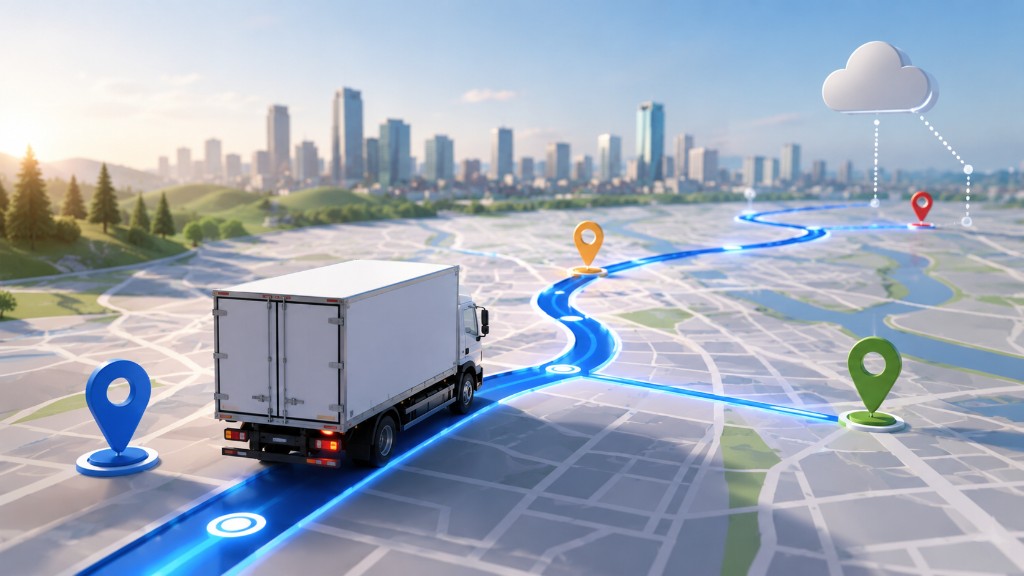
If your delivery routes are planned once in the morning and never updated throughout the day, you are most definitely leaving time and money on the table.
Road conditions change constantly. Traffic builds unexpectedly. Customers request last-minute changes. Some drivers finish jobs earlier than planned, while others run behind schedule. A route that looked perfect at 8:00 a.m. might not be remotely efficient by lunchtime.
This is where dynamic route optimization makes a measurable difference.
Unlike traditional route planning, dynamic route optimization continuously adapts to changing conditions, helping businesses make smarter routing decisions throughout the day. Whether you're managing local deliveries, field service technicians, or a nationwide fleet, dynamic routing can reduce travel time, lower operating costs, and improve customer satisfaction.
What is dynamic route optimization?
Dynamic route optimization is the process of automatically adjusting delivery or service routes in real time based on changing conditions.
Instead of following a fixed schedule, the software evaluates live data such as traffic congestion, new customer requests, driver locations, delivery priorities, and road closures. It then recalculates the most efficient route while keeping disruptions to a minimum.
Unlike static routing, where routes remain largely unchanged after drivers leave the depot, dynamic routing continuously adapts throughout the day. Drivers receive updated stops through their mobile devices, allowing them to respond quickly to unexpected events such as traffic delays, urgent same-day deliveries, cancelled orders, or severe weather.
The goal is simple: keep drivers moving efficiently, regardless of what happens during the day.
Consider a few common situations:
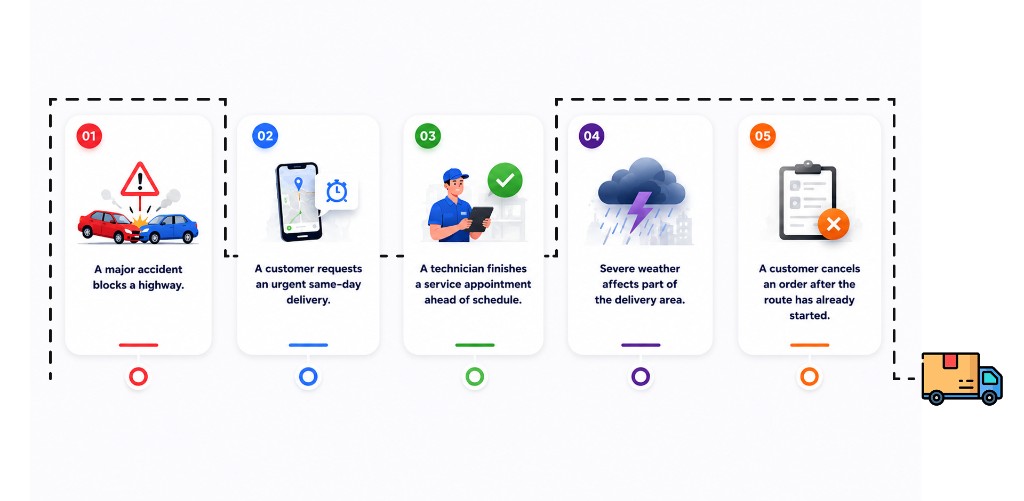
With static routing, these events often create delays across the entire schedule. Dynamic route optimization responds immediately, helping maintain productivity while minimizing the impact on customers.
Modern route optimization software processes thousands of possible route combinations in seconds. What would take a dispatcher hours to calculate manually happens automatically behind the scenes.
How dynamic route optimization works
Behind every optimized route is a powerful combination of mapping technology, GPS tracking, and intelligent algorithms.
The software continuously analyzes operational data, including:
- Live traffic conditions
- Driver GPS locations
- Delivery time windows
- Vehicle capacity
- Driver availability
- Customer priorities
- Road restrictions
- Service times at each stop
Using this information, the software calculates the most efficient sequence of stops while balancing travel distance, customer commitments, and operational constraints. As conditions change throughout the day, routes can be recalculated automatically, with updated instructions sent directly to drivers through a mobile application while dispatchers maintain complete visibility from a centralized dashboard.
Benefits of dynamic route optimization
Lower operating costs
Fuel is one of the largest operating expenses for delivery businesses. By reducing unnecessary mileage, avoiding congestion, and minimizing idle time, dynamic routing helps lower fuel consumption and vehicle wear while reducing overall operating costs.
Higher driver productivity
When drivers spend less time sitting in traffic or backtracking between stops, they can complete more deliveries within the same working hours. Many businesses increase daily delivery capacity without adding vehicles or extending driver shifts.
Better customer service
Dynamic route optimization improves estimated arrival times by using current road conditions instead of assumptions made hours earlier. It also allows dispatchers to respond quickly to customer requests, helping businesses provide more reliable delivery windows and proactive communication.
Improved dispatcher efficiency
Manual route adjustments take valuable time. Dynamic routing automates routine decisions, allowing dispatchers to focus on customer service, exception management, and overall fleet performance instead of constantly rebuilding schedules.
Key features to look for
Not every route planning solution offers true dynamic optimization. When evaluating route management software, look for features such as:
- Real-time route recalculation
- Live GPS vehicle tracking
- Mobile driver applications
- Traffic-aware navigation
- Electronic proof of delivery
- Customer notifications
- Automated dispatching
- Delivery time window management
- Route performance reporting
- Fleet analytics
- Cloud-based access
- Integration with ERP and business systems
These capabilities work together to create a connected delivery operation instead of isolated routing tools.
How bMobile helps businesses optimize routes dynamically
At bMobile, we know that efficient routing isn't simply about finding the shortest path between stops. Every business has different delivery priorities, and the routing strategy should reflect those operational needs.
With bMobile's route management software, routes can be optimized based on factors such as delivery priorities, customer service commitments, vehicle capacity, delivery time windows, and the type of goods being transported. For example, temperature-sensitive products like ice cream or frozen foods can be prioritized earlier in a route, while high-priority customers or urgent deliveries can be scheduled to meet critical service expectations.
As conditions change throughout the day, dispatchers can quickly adapt to traffic delays, road closures, new orders, or cancellations without manually rebuilding routes. Drivers receive updated routes through the mobile app, while live GPS tracking gives dispatchers complete visibility into fleet activity.
Combined with electronic proof of delivery, mobile driver tools, customer notifications, and centralized dispatch, bMobile helps businesses reduce travel time, improve service levels, lower operating costs, and keep deliveries running efficiently from start to finish.
The future of delivery operations
Customer expectations continue to rise, while fuel costs, labor shortages, and operational complexity make every delivery decision more important than ever.
Dynamic route optimization gives businesses the flexibility to respond to changing conditions as they happen, helping drivers stay productive, dispatchers stay in control, and customers receive a better delivery experience. For organizations looking to improve fleet performance and scale efficiently, intelligent route optimization is quickly becoming an operational necessity.