You know your best accounts. You could list them right now without looking anything up.
But could you list the ones that are losing you money?
Most family distributors cannot. Because you can see what a store buys. That is revenue. What you cannot see is what that store costs you to serve. And that is where the real answer lives.
Here are ten types of stops that are most likely eating into your margin. You will recognize a few of them right away.
The 10 stores
1. The friendly time trap
The store owner is a great person. Loves to talk. But your driver ends up spending 40 minutes at a stop that should take 15. The order? $180. In those extra 25 minutes, your driver could have been at two other stores making real money.
2. The chronic returner
Orders $500 a week. Returns $70. Every single week. Nobody thinks twice about it anymore because it has been happening for so long. But $70 a week in returns adds up to $3,640 a year. Product you paid for, loaded, delivered, hauled back, and threw away. The fix is straightforward. If they only sell 8 cases, stop sending 10.
3. The late payer
Owes you $3,500. Has owed you for two months. Your driver keeps delivering because the store keeps ordering. Nobody wants to have the uncomfortable conversation. The real reason it never happens? The driver does not have the exact number when he is standing in the store. "You owe us money" does not work. An exact total on a screen does.
4. The shrinking order
This store used to buy $250 a week. Now it is down to $120. The drop was so slow you did not notice. But $120 does not cover the cost of sending a driver, a truck, and 20 minutes of time to that stop.
5. The difficult receiver
Nowhere to park. No loading dock. The receiving person is never ready. Your driver waits around for 20 minutes before he can even start unloading. The order might be fine, but the wasted time at this stop adds up to 17 hours a year. That is 17 hours your driver could be spending at stops that actually pay.
6. The "let me see what I need" account
This store never orders ahead of time. They wait for the driver to show up and then walk the shelves deciding what to buy. Your driver stands around for 20 minutes. The order is almost always smaller than it would be if the store had planned ahead.
7. The one-item stop
Buys one product from you. Just one. The volume might be okay, but your driver is making a full stop, parking, unloading, writing up an invoice, all for a single item. Every other cost of that stop is the same as a store buying ten products. The math does not hold up.
8. The out-of-the-way stop
Fifteen minutes off the main route. That is 30 minutes of extra driving, round trip, plus the stop itself. The store might be perfectly fine in every other way. But the drive kills the profit.
9. The deal hunter
Only buys when you are running a deal. Full price? They pass. Discounted price? They load up. The problem is your deal pricing is probably close to your cost. So the big orders barely break even, and the rest of the time they buy nothing. Average it out over three months and this account is bringing in almost no margin.
10. The account nobody will drop
Been on the route since your dad started the business. Orders have shrunk. The neighborhood has changed. But pulling this stop feels wrong because it is part of the family history. Nobody has to pull it. But everyone should know what it is actually costing. $50 a week in losses is $2,600 a year. On a family operation, that is real money.
How to find yours
Grab your route sheets and your books from the last month. Pick one route. For each stop, write down four things:
- How much did they buy?
- How much did they return?
- How long does the driver spend there?
- Do they pay on time?
You do not need a spreadsheet. Just look at the list. The stops where the revenue is low, the returns are high, the time is long, and the payments are late will stand out immediately.
Once you spot them, you have four moves.
Raise the minimum
Tell the store: "We need at least $200 per delivery to keep this stop on the route. Can we get there, or should we switch to every other week?" Store owners understand this. They run a business too.
Fix the load
Stop sending what the store orders. Start sending what the store actually sells. Returns drop. Your margin goes up. The store will not even notice because the shelves still look full.
Collect what you are owed
Show up with the exact number. Not a rough idea. The exact total, the invoice dates, and how many days late each one is. People pay when the number is clear. They stall when it is vague.
Deliver less often
Move the small accounts from weekly to every two weeks. You cut your cost roughly in half. They still get product. You still keep the relationship.
Where this breaks down
Everything above works. You can do it with a pen, a calculator, and a couple of hours. You will find real problems and make better calls this month.
The part you cannot do on paper is keep it going. After a couple of months, the numbers shift. Good accounts start slipping. Slow payers get slower. And you are back to guessing until you find time to pull the data again.
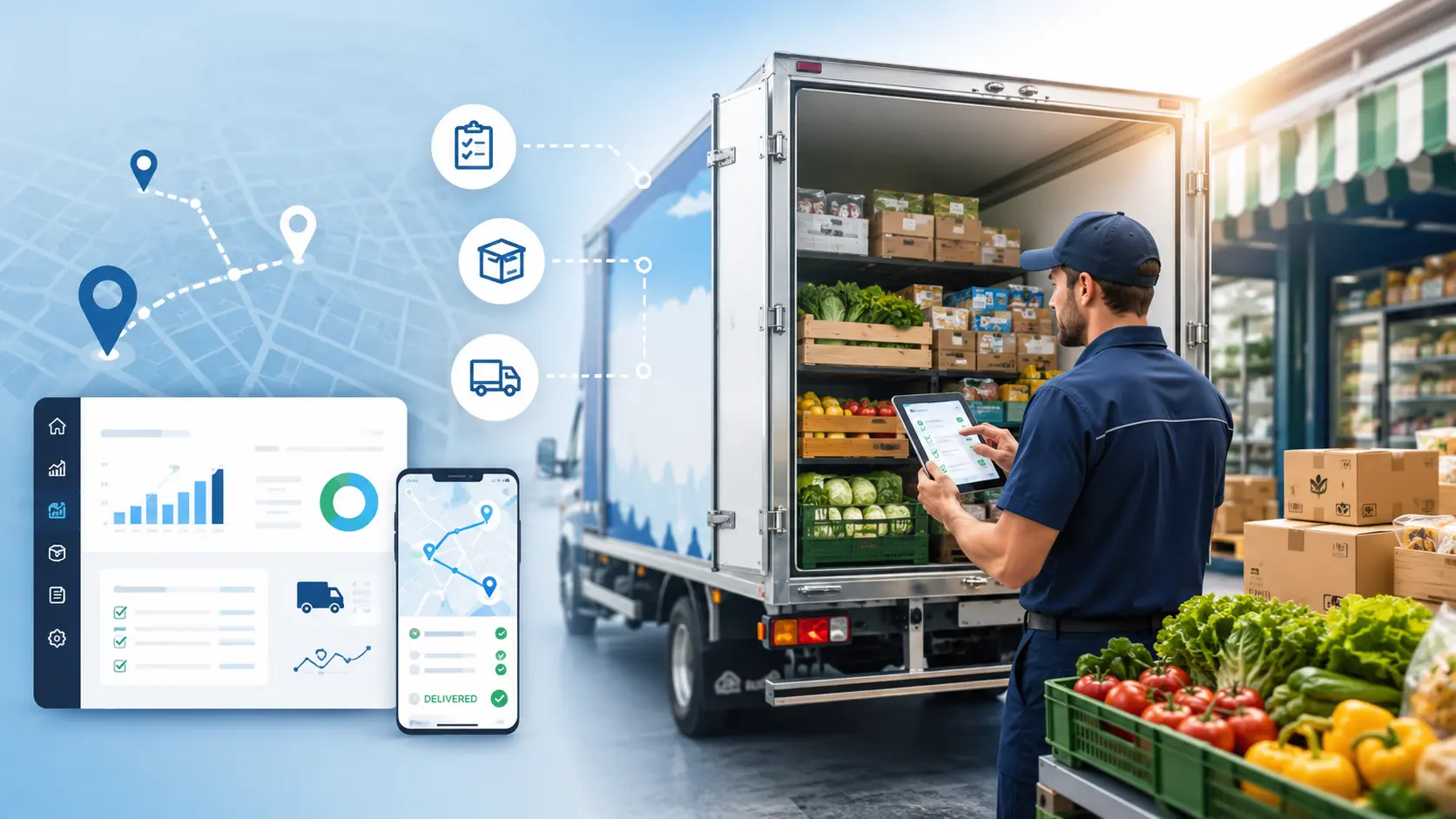
That is what a system fixes. When the driver's device logs every delivery, every return, every minute at every stop, and every payment, the math happens on its own. Every Monday morning, you can see your accounts listed by actual profit. The ones at the bottom are the ones to deal with that week.
That is what we built bMobile to do. Not to replace what you already know. To make sure the numbers are there when you need them.
If you do this work over the weekend and find three accounts that are bleeding money, this blog just paid for itself. You did not have to buy anything or talk to anyone.
If you want that same visibility every week without doing it again by hand, that is where we come in. Twenty minutes. We show you the product the way your driver sees it. If it works for you, we talk. If it does not, you keep what you found and we wish you a good week.
bMobile Route Software. Family-owned since 1998. Over 1,000 family distributors on the road.
See your accounts by actual profit — the way your driver sees the day
Request a Demo