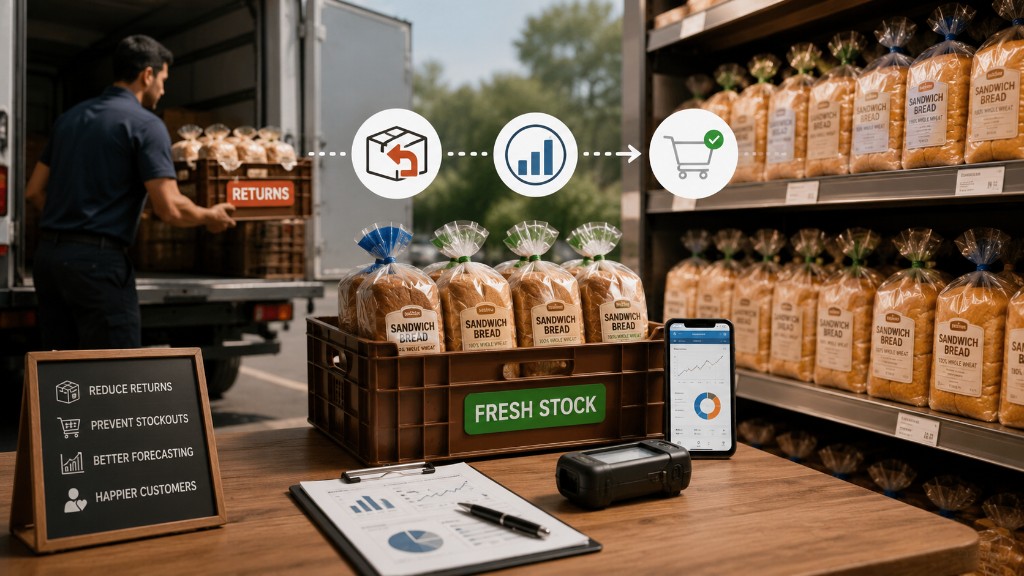
For bread distributors, deciding how much product to deliver to each customer is a daily challenge. Send too much and unsold bread comes back. Send too little and the retailer can run out before the next delivery.
Neither situation is ideal. Returns create waste and add work for drivers, while stockouts can mean missed sales and unhappy customers.
The challenge is that every account has different demand. A supermarket may move large volumes over the weekend, while a convenience store may have a steadier but smaller demand. Restaurants, schools, and independent retailers bring their own ordering patterns into the mix.
Getting delivery quantities right requires a good understanding of what is happening at each stop.
Start with delivery history
Past deliveries can tell a distributor a lot about what a customer actually needs.
If a store regularly receives 30 loaves and returns 10, there is probably an opportunity to adjust the delivery. On the other hand, if another customer consistently sells through its stock before the next delivery, reducing quantities could create a stockout.
These patterns become easier to identify when delivery information is recorded consistently.
Instead of looking only at what a customer ordered, distributors can look at what was delivered, what was returned, and how those numbers changed over time. That gives managers a better basis for adjusting quantities.
It also helps separate an unusual week from a recurring problem.
Your drivers are an important source of information
Drivers often have the best understanding of individual customer locations because they see the stores every day.
They know which products move quickly, which customers regularly have returns, and which accounts have changed their ordering habits. That experience is valuable, but it can be difficult to share when it stays in a driver's head or on a handwritten note.
A digital delivery process gives drivers a consistent way to record what happens during each stop.
When returns, delivered quantities, customer confirmations, and other information are captured as part of the delivery, that knowledge becomes available to the wider team. It can also help a new driver get up to speed when taking over an unfamiliar route.
Returns are useful data
Returns are often treated simply as product that needs to be collected and brought back. They can also provide useful information about the delivery operation.
A consistent pattern of returns from one customer may indicate that quantities need to be adjusted. If returns increase suddenly, it may point to a change in demand or another issue at the account. Looking at the same information across several customers can also help distributors spot products or routes that need closer attention.
The key is having the information available.
Paperwork can tell you what happened on a particular delivery. A digital delivery history makes it easier to look back across weeks or months and identify patterns.
Reducing returns shouldn't mean sending less everywhere
It can be tempting to respond to high returns by cutting delivery quantities across the board. That can create another problem.
A retailer that regularly runs out of popular products is losing sales. The distributor may also face additional calls, emergency deliveries, or pressure to change the delivery schedule.
The better approach is to make adjustments based on individual customer demand.
Some accounts may need larger deliveries on certain days. Others may benefit from smaller, more frequent deliveries. A distributor may also find that a customer's delivery frequency needs to change as its sales volume changes.
Those decisions require more than a standard order history. Delivery and return information can provide another layer of insight into what customers actually need.
Delivery schedules affect the equation
Quantity isn't the only consideration.
If a customer has a short receiving window, the driver needs to arrive at the right time. If a delivery takes longer than expected, it can affect the stops that follow. Adding another delivery to a route can also increase driver hours and mileage.
This makes route planning an important part of the process.
When customer requirements, delivery schedules, and route information are managed together, dispatchers can make better decisions when routes need to change. They can also identify routes that regularly take longer than expected and investigate why.
For a bread distributor, that can mean fewer rushed deliveries and more predictable service for customers.
Make changes based on the accounts that need them
Distributors don't need to review every customer at once.
Start with the accounts generating the most returns or the most frequent quantity adjustments. Look at their delivery history and compare it with similar customers. That can help determine whether the issue is the quantity being delivered, delivery frequency, customer demand, or something else.
The same process can then be applied across the rest of the customer base.
Over time, this creates a more accurate picture of demand at the individual account level rather than relying on a standard quantity for everyone.
Give the delivery team better visibility
Bread distribution involves a lot of decisions in a short amount of time. Drivers need to complete their stops, dispatchers need to manage changes, and managers need to understand what is happening across the operation.
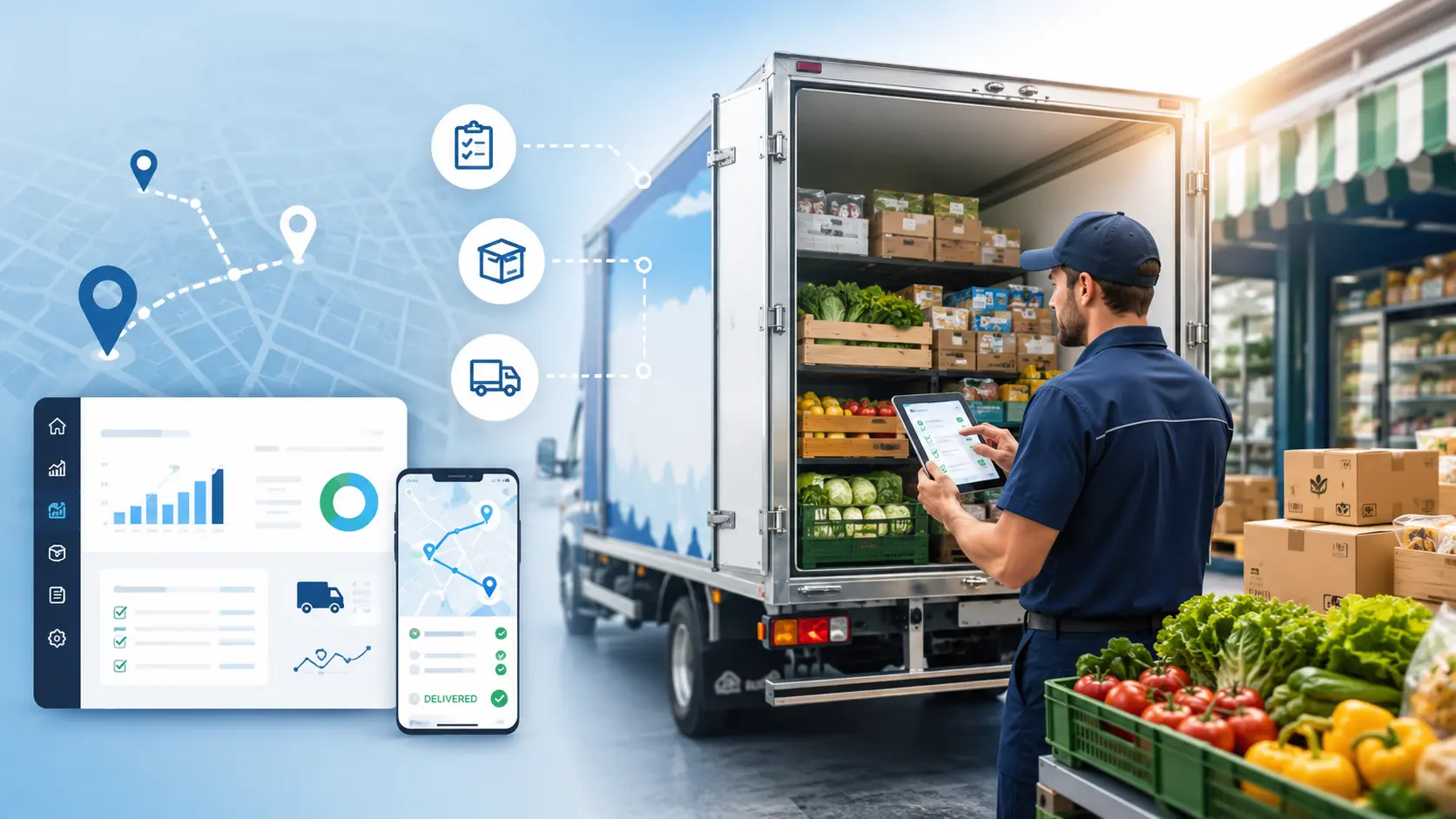
bMobile brings route planning, driver tracking, delivery management, and proof of delivery into one system. That gives bread distributors better visibility into what happens on the road, including the information coming back from individual customer stops.
For distributors looking to reduce unnecessary returns while keeping customers stocked, better delivery data can make those decisions much easier. It gives the team a clearer view of what each account needs and where changes to routes, quantities, or delivery schedules could improve the operation.
See how bMobile helps bread distributors reduce returns and prevent stockouts
Request a Demo