Route planning often looks simple on the surface. Pick the fastest path, assign the stops, and get the trucks moving. But real delivery operations do not work that way.
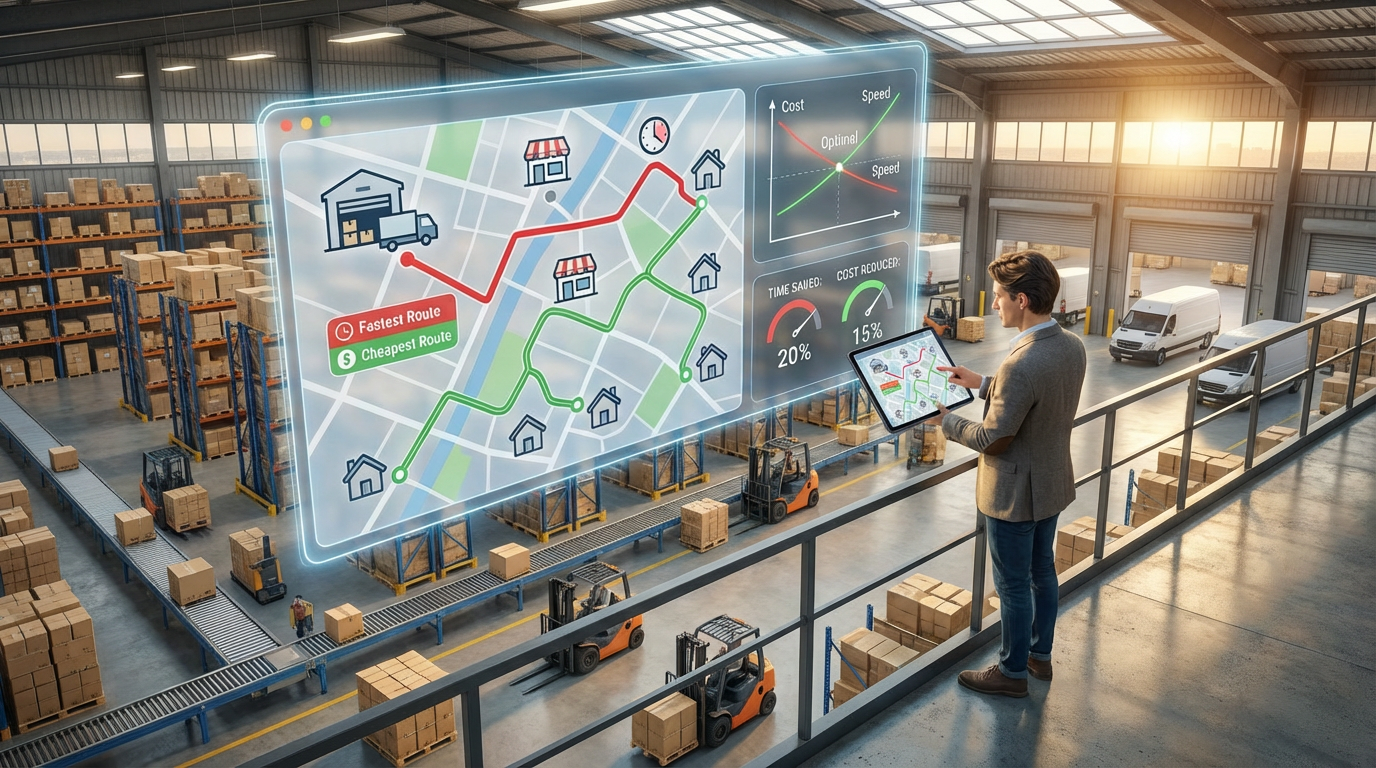
The fastest route is not always the most practical one. The cheapest route is not always the one that protects service. This is where many businesses struggle. They try to move faster, but costs rise. They try to cut costs, but deliveries slow down. Over time, both service and margins take a hit.
That is why learning how to balance cost and speed in route planning matters so much. Good routing is not about choosing speed over cost or cost over speed. It is about finding a route structure that helps the team deliver on time, control miles, reduce wasted fuel, and keep the day manageable for drivers and dispatchers.
This is especially true in route optimization for multi stop deliveries and route optimization for last mile deliveries, where small route decisions can create a big impact across the day.
Why balancing cost and speed matters in route planning
In most delivery businesses, route planning affects more than travel time. It affects fuel spend, labor hours, delivery consistency, customer satisfaction, and how much dispatch work piles up during the day.
When route planning focuses too much on speed, the operation may end up taking longer routes, burning more fuel, and putting more pressure on drivers. When it focuses too much on lowering miles, drivers may get stuck in slow streets, crowded loading zones, or inefficient stop sequences that drag the route out.
That is why the real question is not whether speed matters or cost matters more. The real question is how to reduce delivery costs with route planning without slowing the whole operation down.
The answer usually comes from better route design, better stop sequencing, and better visibility into the real conditions each route has to handle.
How speed-first routing creates hidden delivery costs
A lot of teams assume the fastest route must be the best one. On paper, that sounds reasonable. But in real route planning, the fastest path between stops may not be the most efficient route for the business. A route that saves a few minutes on the road might add extra miles, increase fuel use, or push drivers into difficult traffic zones later in the day.
It can also create timing issues at the stop level. A driver may arrive before the receiving window opens. A stop may require a longer unload time than expected. A route that looked quick in the system may start falling apart once the day begins.
This is one reason delivery route optimization for fuel efficiency has become so important. It is not enough to get drivers there quickly. The route also needs to make financial sense.
If speed is treated as the only goal, the business often ends up paying more for routes that do not actually perform better.
How cost-only route planning slows the operation down
The opposite mistake happens when teams focus too heavily on reducing miles or cutting direct route cost. On the surface, this seems efficient. Shorter distance should mean lower cost.
But the shortest route is not always the best working route.
A route with fewer miles may involve slower roads, dense traffic, difficult parking, more left turns, or longer time spent at each stop. That means the route may save distance while losing time. Driver hours rise. Deliveries stretch later into the day. Dispatch spends more time responding to delays and customer calls.
This is where many businesses miss the full picture of how to reduce delivery costs with route planning. Lower cost does not come only from cutting miles. It comes from improving overall route efficiency.
That includes travel time, fuel usage, labor hours, and route stability from start to finish.
Delivery route optimization for fuel efficiency starts with better route choices
Fuel is one of the easiest route costs to notice and one of the hardest to control when routing is weak. Extra miles, poor stop sequencing, repeated backtracking, and routes that push drivers through slow traffic all raise fuel spend. Even small inefficiencies add up when the same patterns repeat across many routes and many weeks.
That is why delivery route optimization for fuel efficiency should not be treated as a separate goal. It should be part of route selection itself.
When routes are sequenced properly, when territories are planned with logic, and when traffic and stop conditions are considered, fuel efficiency improves naturally. The business does not need to chase savings after the fact because the route was built better from the start. This also helps drivers. Cleaner routes are easier to follow, easier to complete on time, and less likely to create mid-day confusion.
Route optimization for multi stop deliveries requires more than distance calculations
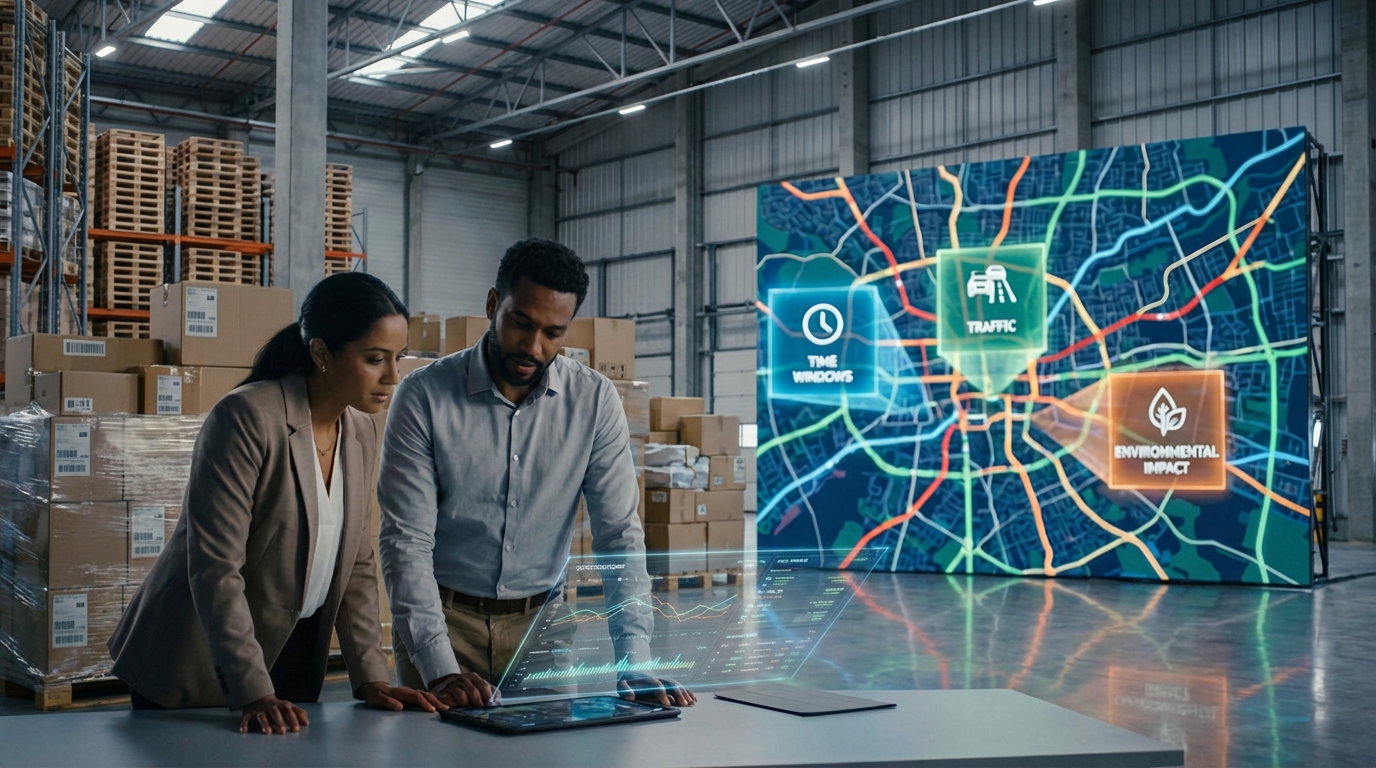
Multi stop routes create a level of complexity that simple mapping tools do not handle well.
In route optimization for multi stop deliveries, the problem is not just how to get from point A to point B. It is how to organize a whole chain of stops in a way that controls time, mileage, fuel use, and service quality all at once.
Each stop adds its own variables.
- Some customers have delivery windows.
- Some stops take longer to unload.
- Some areas have access issues, parking limits, gate restrictions, or timing rules that affect when a truck should arrive.
When those conditions are ignored, the route may look fine in theory but perform badly in the field.
That is why multi stop route planning needs more than basic travel estimates. It needs routing logic that reflects how deliveries actually happen.
What balanced route planning looks like in practice
Balanced route planning usually has a few common traits.
- The route sequence makes sense operationally.
- Driver hours stay within reason.
- The miles are controlled, but not at the expense of service.
- Delivery windows are respected.
- High-friction stops are planned carefully instead of being treated like normal stops.
Most importantly, the route holds up during the day. That is the real test.
A route is not good because it looked efficient at the planning stage. It is good because it helped the team complete deliveries with less waste, fewer delays, and less manual intervention. That is what businesses should aim for when thinking about how to balance cost and speed in route planning.
How route optimization software helps reduce delivery costs with route planning
As delivery operations grow, balancing these tradeoffs manually becomes harder. More customers, more stops, more route exceptions, and more timing constraints make planning more complicated than a dispatcher can handle consistently by instinct alone.
This is where route optimization software helps. It gives the team a better way to evaluate routes before trucks leave the yard. It helps reduce unnecessary miles, improve stop sequencing, account for delivery windows, and support more stable route execution.
That is how businesses start to see real improvement in how to reduce delivery costs with route planning. The goal is not just lower cost or faster routes in isolation. The goal is a route plan that performs well in the real world and keeps the operation under control.
Practical steps to improve route efficiency
Companies that manage route efficiency well usually follow a few consistent practices.
- They analyze historical delivery data to understand where time is being lost.
- They measure route performance not only by miles but also by driver hours and stop completion times.
- They review routes regularly to identify patterns that increase cost or delay deliveries.
- They also consider driver knowledge. Experienced drivers often understand which routes remain stable under changing conditions.
These insights help refine route selection decisions over time. Instead of relying on assumptions, route planning becomes guided by real operational data.
The close
Balancing cost and speed is one of the most important parts of route planning. The fastest route is not always the best one. The cheapest route is not always the one that protects service. Good routing comes from understanding both sides and planning routes that work well across the full day.
For businesses managing route optimization for multi stop deliveries this balance is what helps protect both margins and service quality.
When route planning improves, fuel waste comes down, driver time is used better, and deliveries become more dependable. That is what strong routing should do. It should help the business move efficiently without creating extra cost somewhere else.
Ready to optimize your multi-stop delivery routes?
Request a demo