A leak you have been calling something else
If you run a family DSD route business, there is a specific line in your P&L that has been quietly growing for years. It shows up as "stale credits" or "customer returns" or "cost of doing business." Every operator has it. Almost nobody has named it.
It is the cost of cases you left in a store's backroom and forgot about. Cases the store never rotated forward. Cases that sat, went past code, and turned into a credit demand months later that landed on your invoice with no warning. You paid for it. You wrote it off. You moved on.
This piece is about how to stop paying for that leak. Because once you see the pattern, it is one of the easiest operational problems in your business to fix. And once you fix it, the money stays with you.
A Tuesday morning nobody wants to have
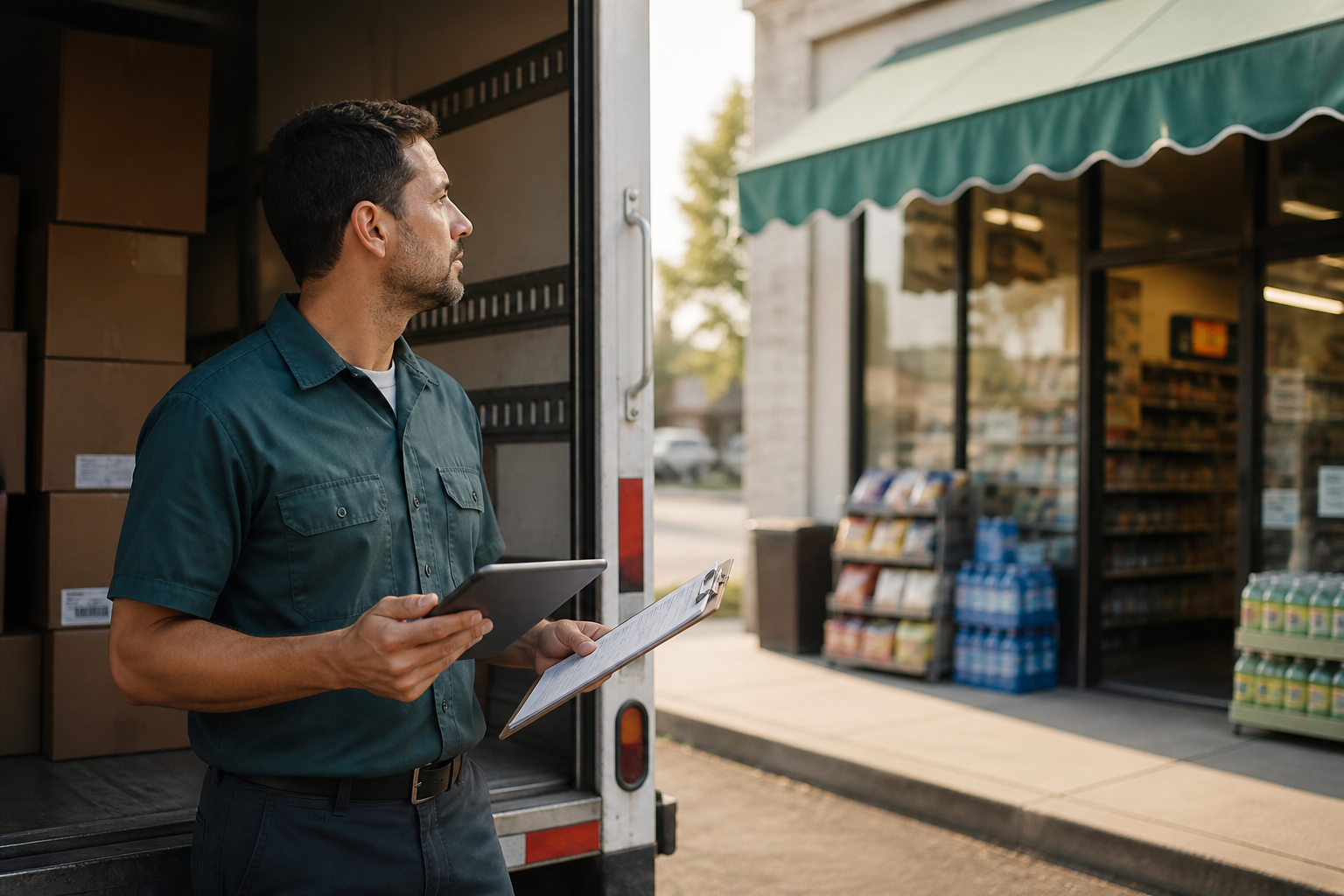
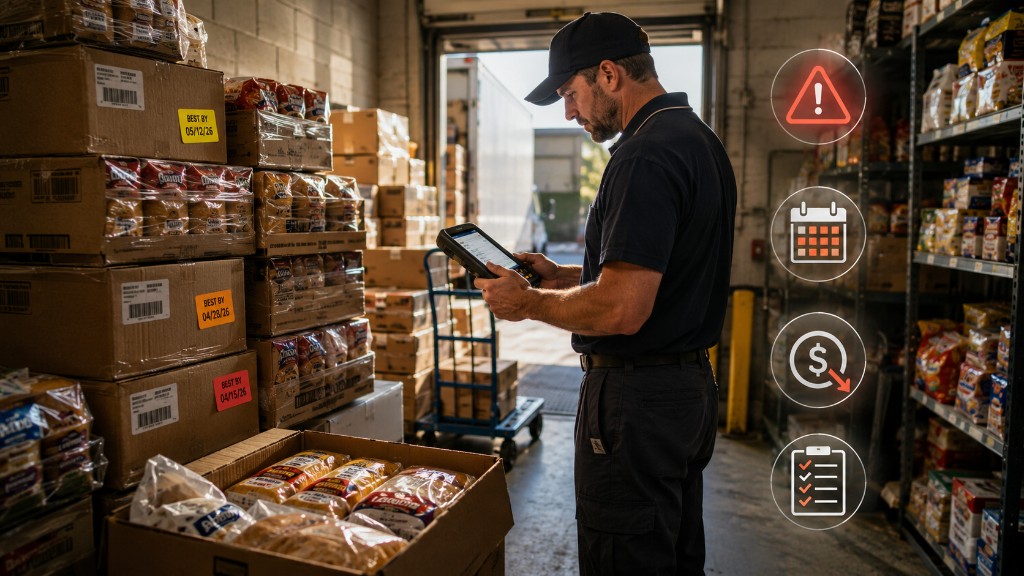
You walk into a store you have been servicing every week for two years. The store manager waves you over. He points to the back corner and asks about a return credit. There are twenty-six cases stacked there. A few of them you cannot even place. The dates on the boxes tell you they have been past code for a while.
If you have been in this business for more than a couple of years, you have had this Tuesday morning. And you probably wrote off the credit and moved on. It felt like the cost of doing business. It is not.
The number that surprises most operators
Depending on the size of your route and the mix of accounts you serve, the backroom leak runs somewhere between two and eight thousand dollars a year in unrecovered returns. On some routes it is smaller. On big multi-brand routes it can be much more. It does not show up as a line item anywhere. It is folded into your general stale credits, absorbed, and forgotten.
But it is not random. It is not unavoidable. It is the result of a specific gap in how DSD operations and store receiving actually work together. Once you see the gap, you can close it.
Why the backroom pile keeps growing
Cases end up in the backroom for reasons that make sense at the moment they happen. The most common ones are:
- The shelf was full when you arrived. You dropped a case or two in the back for the store to pull forward when there was room.
- The store was running a promo the following week. You brought extra product early. The extra went to the back.
- The receiving manager was too busy to sign a return, so the product came off the truck but did not get processed.
- A store manager asked for holdover inventory. Nobody wrote down what happened after.
- A driver in a hurry dropped an overflow case that would have taken ten minutes to place on the shelf. The store said they would handle it.
Each of those moments is legitimate. Every one of them creates a case in the backroom that nobody is tracking.
The part that is nobody's job
Here is the structural problem. On your side, the discipline of the route ends when the truck leaves the lot. Your driver stocked the shelf, captured the invoice, and moved to the next stop. Any case left in the back is out of sight until the next visit.
On the store's side, the backroom is nobody's job either. The store manager is running the front. The receiving manager processes deliveries and moves on. The stock crew rotates the shelf but rarely reaches for the backroom pile unless the shelf is empty.
So the cases sit. The store benefits from the pile up to a point, then it becomes a nuisance, and the manager wants it gone. That is when you get the Tuesday morning conversation. By then, the product is past code. The store owns none of the cost. You own all of it.
The discipline that closes the leak
The good news is you do not need software, a new system, or a formal process to start closing this. You need one habit, done the same way at every account, every month.
Once a month, at every account, walk the backroom.
Not glance from the doorway. Walk. Look at what is there. Read the dates on the boxes. Compare against your own records for what your driver left and when.
If you do this at every account for ninety days, you will see three things happen:
- You will start catching cases before they go past code. Product that is still saleable can be pulled forward, moved to another account, or swapped with newer stock.
- You will start having smaller, more frequent conversations with store managers instead of one big credit demand every few months. Small conversations are easy. Big credit demands are painful.
- You will notice patterns in which accounts accumulate faster than others. Some stores forget the backroom entirely. Some rotate on their own. Once you know which is which, you can adjust how you load and what you leave.
The two-minute rule for leaving anything in the back
Alongside the monthly walk, one more habit helps. Every time you or your driver leaves a case in the back that was not part of the planned load, write it down before you leave the store.
Two lines. Store name. What was left, in what quantity, with what date.
Do this for three months and the backroom pile at every account starts to shrink on its own. Not because you have started doing more work. Because you have stopped forgetting.
The conversation with the store manager
When you start walking the backrooms, you will find product that has been sitting for months. Have the conversation. Not as a complaint, as a partner. Walk the manager through what you found. Ask what the store wants to do. In most cases, they will thank you. Nobody else is paying attention to that corner of the store, and the manager knows it is a problem they cannot fix alone.
What a route accounting system actually does with this
Everything above works on paper. Many family DSD operators run it that way and see the leak close within ninety days. What a route accounting system does is take the same discipline and remove the parts that fail when the day is long, the driver is tired, or the operator is running two accounts behind schedule.
Let us walk through what actually happens on a route running on a system like bMobile, from the truck to the office to the next visit.
At the truck, Monday morning
Your driver is at the account. The shelf is full. There are two cases of the multigrain loaf left over, and the store manager asks the driver to leave them in the back until Friday when the shelf turns over.
On paper, the driver either writes it down on a slip that may or may not survive the day, or does not write it down at all. On a route accounting system, the driver taps three times on the handheld: quantity, product, note. The record is against the account, with a date stamp, before the driver walks back to the truck.
At the office, Sunday night
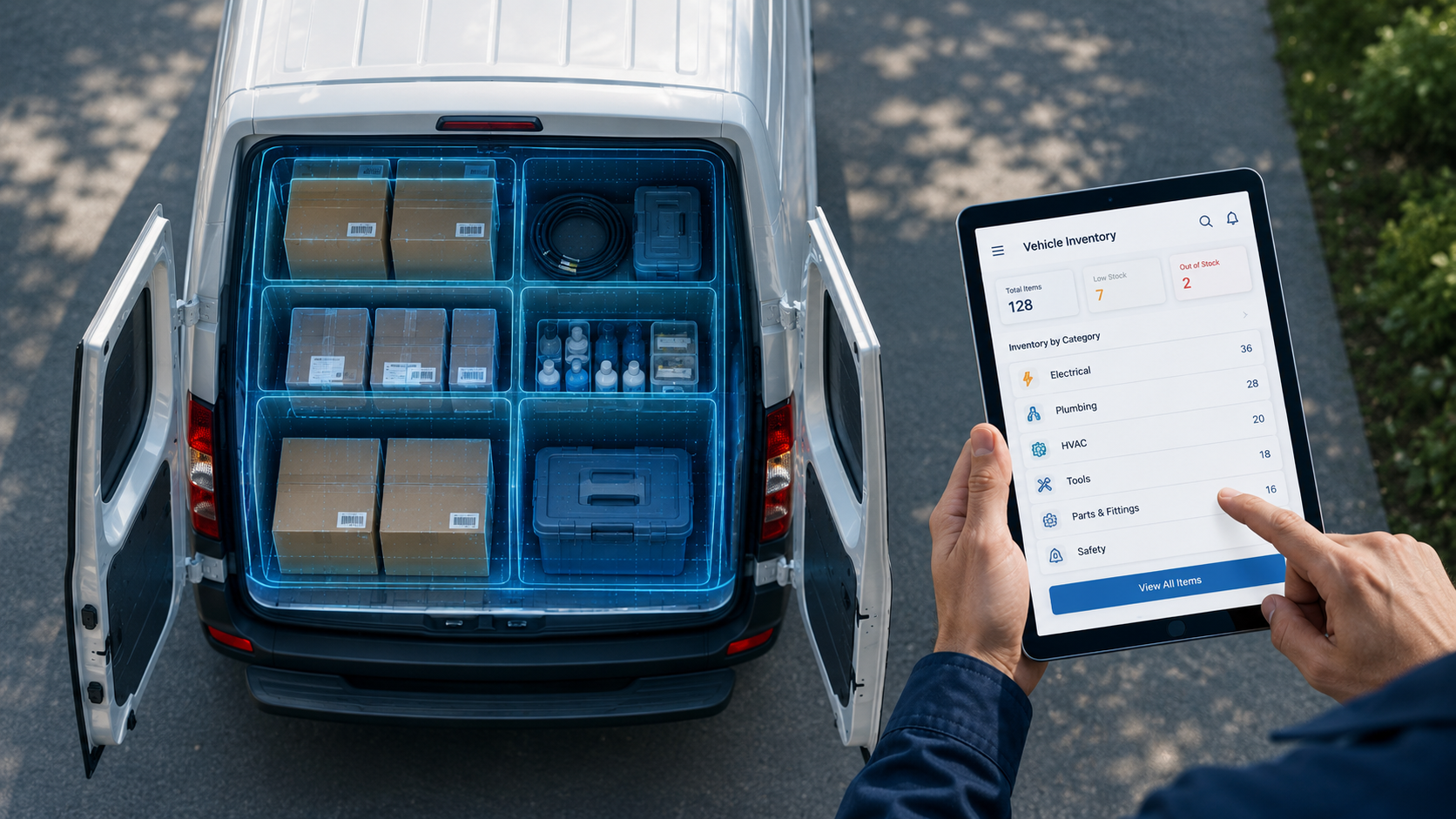
You sit down for the weekly review. Instead of trying to remember what your driver told you eleven days ago, the system shows you a single view: every case currently sitting in a backroom across every account on your route. Sorted by age. Highlighted where any case is within ten days of code.
You see three cases at one account that need to move by Wednesday. You see a store where product has been accumulating steadily for three weeks and needs a conversation. You see two accounts that are handling their backrooms well and can be left alone.
The Sunday review that used to take an hour of trying to reconstruct the week now takes fifteen minutes and shows you exactly where to act.
At the next visit
The driver's route sheet for that account opens with the backroom line item. Two cases of multigrain, left last Monday, in the back. The driver walks the back, finds one case still there (the other one rotated forward), tags it as recovered, and the account's record updates.
The next day, you can see across every account whether last week's leaves were recovered, forgotten, or turned into a return. Every case is either accounted for or flagged. Nothing disappears into someone else's memory.
What ninety days of this looks like
After three months of running the backroom discipline through a route accounting system, three things become visible that a paper-based operator will not see:
- The accounts where the backroom problem lives. Some stores handle it. Some do not. The ones that do not are the ones costing you the most money, and they may not be the ones you would have guessed.
- The SKUs that end up in the backroom most often. Sometimes it is a slow mover. Sometimes it is a promotional product the brand pushed too heavily. Either way, the pattern shows up in the data before it shows up in the credit demand.
- The direct dollar amount of the leak, by account and by SKU. Instead of "a few thousand a year somewhere," you know exactly which account is costing you what. That is the number that lets you have the right conversation with the right store manager.
A route accounting system does not walk the backroom for you. The driver still opens the door. What the system does is turn what the driver sees into a record, the record into a pattern, and the pattern into a decision you can act on. Six months of that data closes the leak in a way that memory and paper cannot match.
Operators running on paper can do this work. It takes more time and more discipline. Operators running on a route accounting system spend less time capturing and more time on the walk itself. Either way, the leak closes. The difference is how quickly, and how much of your evening is spent trying to remember what happened three weeks ago.
The pattern once you see it
The backroom is where the trust between operator and store quietly breaks down. You trust the store to rotate. The store trusts you to check. Neither of you does. The pile grows. The credit demand comes. Both of you feel wronged.
The discipline of the monthly walk repairs the trust. Whether you run it on paper or on a route accounting system, the outcome is the same: cases stop disappearing, credit demands get smaller, and store managers start treating you as a partner instead of a supplier. It takes twenty minutes at each account. Some months you will find nothing. Some months you will find enough to pay for the walk ten times over.
Either way, you have done the one thing that keeps this particular leak closed. Thousands of dollars a year. Sitting in cases in a corner of a store you visit every week. That is the work.