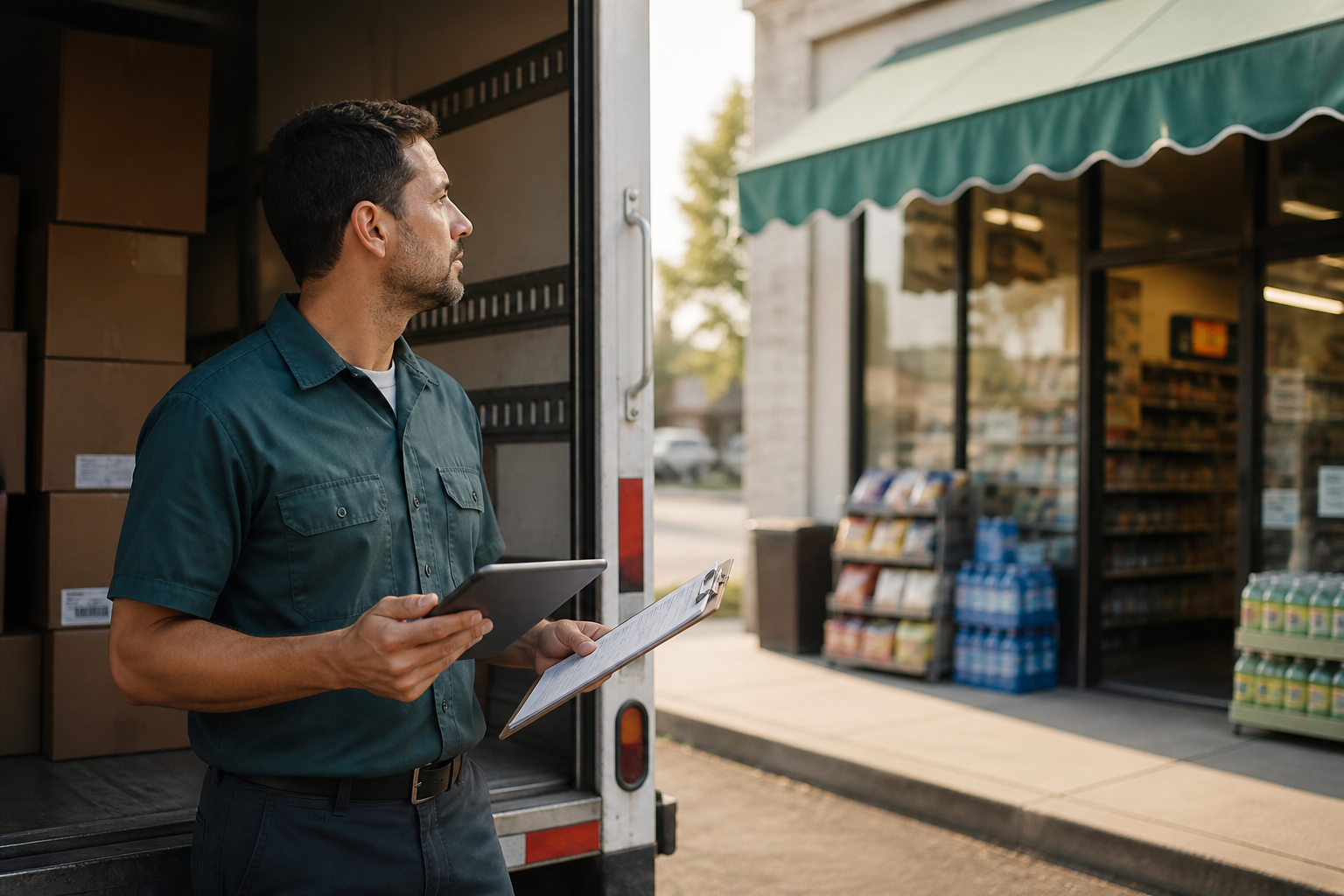
A major foundational force of the American economy are family-owned businesses, accounting to over 57% of the nation's GDP and employing millions. Within this landscape, family-owned food and beverage distributors play a critical role. From local bakery routes and regional snack suppliers to independent beverage wholesalers, these companies are the lifeblood of American communities.
In the United States, the food and beverage industry is a massive, fast-moving machine. While national corporations and local independents alike are essential to the supply chain, family-owned firms face a unique challenge. They have to maintain their signature personal service while scaling up to meet modern demands. As fuel costs rise and logistics become more complex, simply working harder is not always enough to protect the bottom line. To ensure a legacy of growth, distributors are turning to distribution software like bMobile Route Software to streamline their operations.
Moving away from the guessing game
Most successful distribution businesses were built on years of experience and a deep understanding of their territory. But as the business grows and the pace of the market accelerates, it becomes impossible to manage every detail from memory. Small errors in the field like an unrecorded return or a missed delivery window can quickly add up. Modernizing the route is about giving a business the tools to operate with total precision.
Here is how modern route management fixes the daily hardships of a food and beverage fleet.
1. Seeing what is happening on the road in real-time
One of the biggest frustrations for an owner or manager is the afternoon surprise. You should not have to wait until the end of the day when the driver walks back into the office to know if their routes were successful. Live route tracking provides a minute-by-minute map of every truck and stop. This visibility allows teams to coordinate better and respond to customer calls with actual data. If a customer calls asking where their delivery is, you can give them an exact answer instead of guessing. It also helps you spot bottlenecks, such as a specific loading dock that always causes a two-hour delay, so you can adjust your schedule and keep the rest of the day on track.
2. Cutting down on money lost to stale products
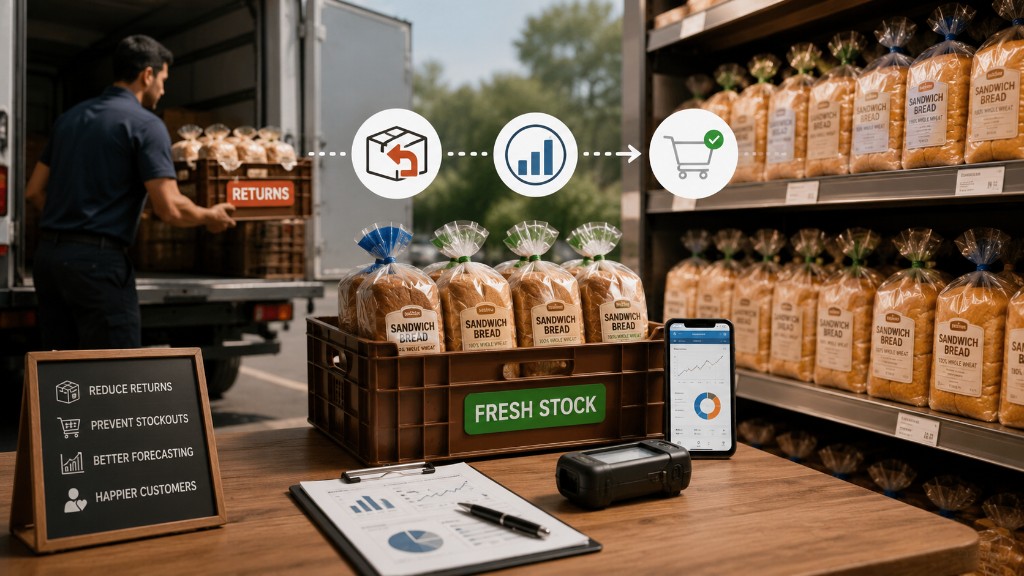
In the food business, stale or expired product is a direct hit to profitability. If you know you are losing money on returns but cannot pinpoint which stores are over-ordering, you cannot stop the bleed. bMobile lets drivers tag every return at the shelf the second it happens. By tracking these by store and by date, you get a clear report that shows where the loss is. This allows you to load the trucks for the next run based on actual sales data rather than guesswork. You stop paying to transport product that is just going to expire, which protects your margins and keeps your inventory fresh.
3. Getting rid of manual data entry in the office
In many growing businesses, an office manager can spend hours every night manually re-entering delivery tickets into their accounting software like QuickBooks, NetSuite, or SYSPRO. That is time and money wasted on busy work that could be spent on growth. With digital route software, the invoice writes itself. When the driver creates the invoice on the truck and the customer signs it off, the data is directly captured into the accounting system without any extra work. This eliminates re-keying and extra carbon copies so the office team can focus on higher-level tasks.
4. Making sure the plan is followed in the field
Protecting a business means ensuring that pricing and schedules are respected across the board even when you are not there to watch. Without a digital system, it is far too easy for unauthorized discounts or unrecorded delays to slip through the cracks. Using geo-fenced clock-ins and pre-approved price rules ensures that only the prices you have authorized are being applied at the back door. This prevents drivers from making on-the-fly pricing decisions that hurt your profit margins. It is a simple way to maintain consistent standards across your routes and ensure that every stop is as profitable as it should be.
5. Figuring out which routes are more profitable
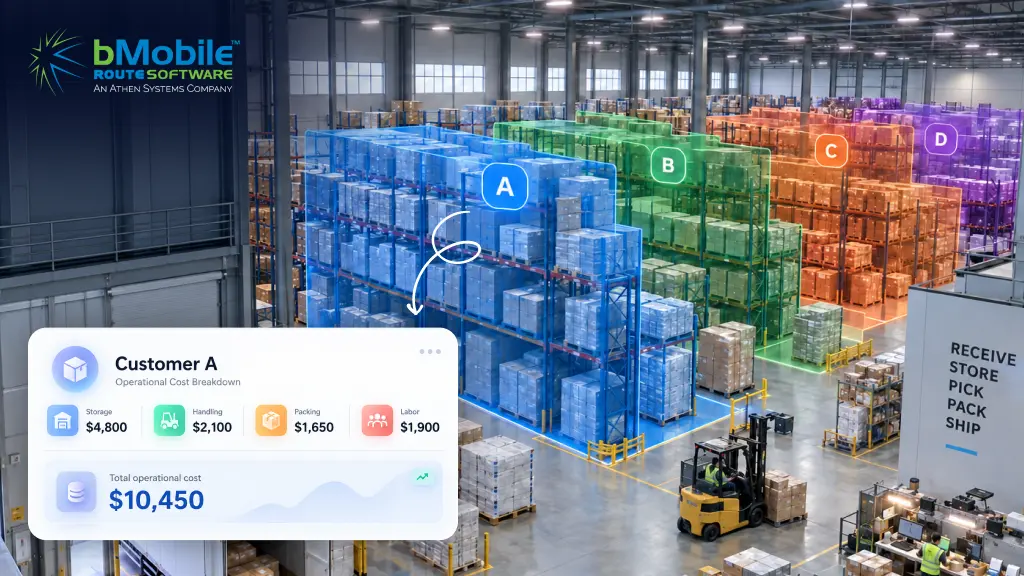
Most owners know their total revenue, but few know which specific routes or stores are truly profitable. Some routes look busy because the truck is full and the driver is working ten hours, but they might actually be costing the company money once you factor in the high cost of fuel, vehicle wear, and driver overtime. Having a single screen that shows profit per route and profit per store helps you evaluate your entire map accurately.
This level of detail allows you to see the hidden losses like stores that require too much time at the dock for too little volume, or the rural routes that involve too many miles for the margin they provide. Instead of just seeing a lump sum of sales, you can identify your best customers and focus your growth efforts there. It helps you stop making decisions based on activity and start making them based on what is actually putting money in the bank at the end of the day.
6. Making it easier for customers to order
Customers today appreciate convenience and speed. They do not want to play phone tag or wait for a callback just to get their weekly delivery. By providing a simple reorder link that does not require an app or a login, you make it easier for them to buy from you than from anyone else. They simply tap a link, see their purchase history, and update the quantity for the next delivery. This removes the friction from the buying process and makes your business the easiest vendor to work with. When ordering is this simple, customers are less likely to look for other options.
Reliability in the dead zones
A major reality for American distributors is the lack of consistent cell service. Whether a driver is on a rural backroad or inside a concrete grocery store basement, the internet is going to drop.
Most software fails the moment the connection dies, but bMobile is built for the real world. Our app works 100% offline. Drivers can still scan items, create invoices, and capture signatures without any signal. The second they get back into a service area, everything syncs up with the office automatically. This ensures the business never grinds to a halt just because the internet did.
Building a foundation for the future
At the end of the day, investing in route management software is an investment in the company's future. Every hour saved on a route or every dollar saved on manual data entry is a resource that can be put back into growing the business or expanding into new territories.
By streamlining the logistics and cutting out the daily chaos, food and beverage distributors can ensure they remain a foundational force in the American economy for decades to come.
Are you ready to take your family distribution business to the next level?
Request a Demo