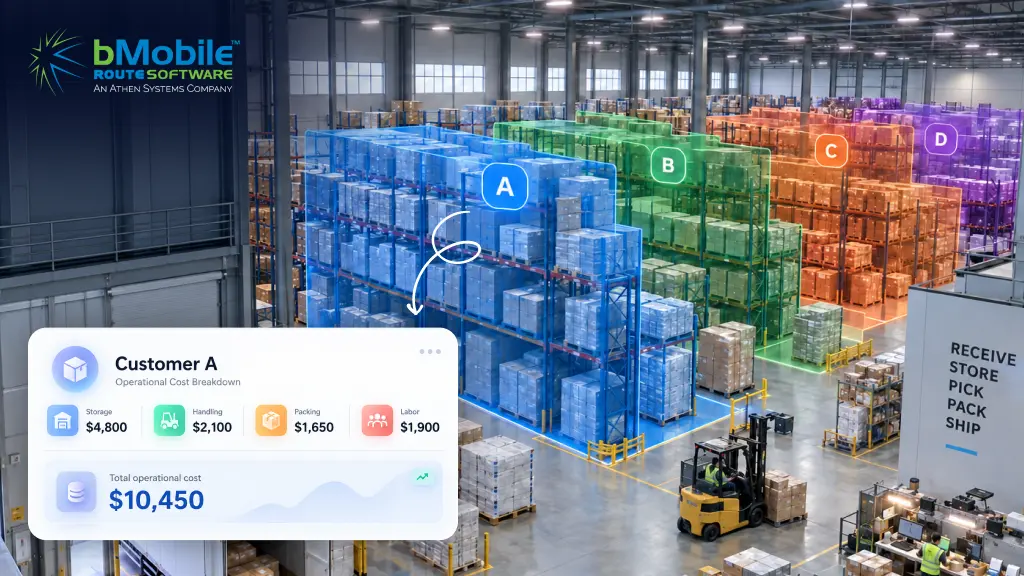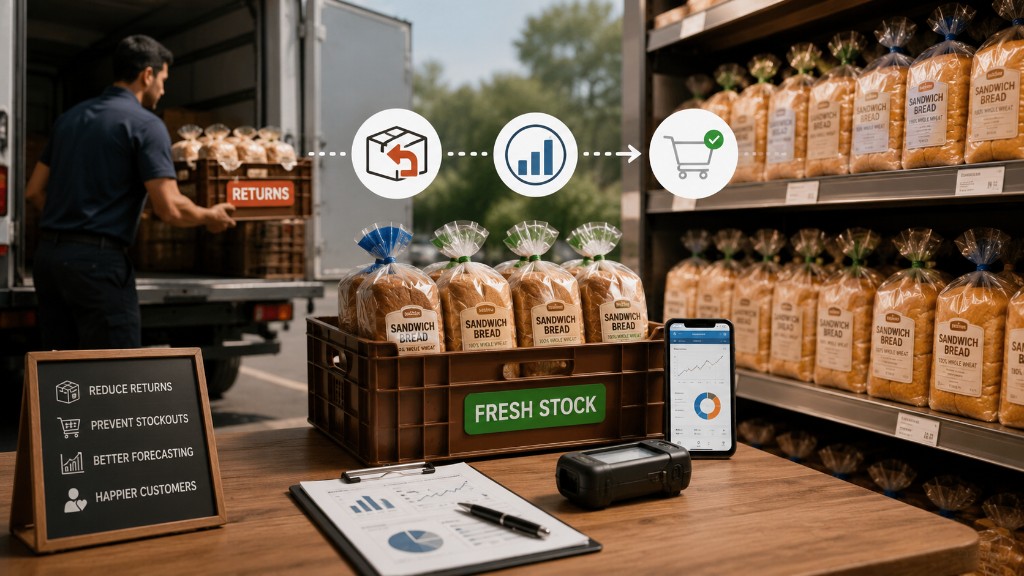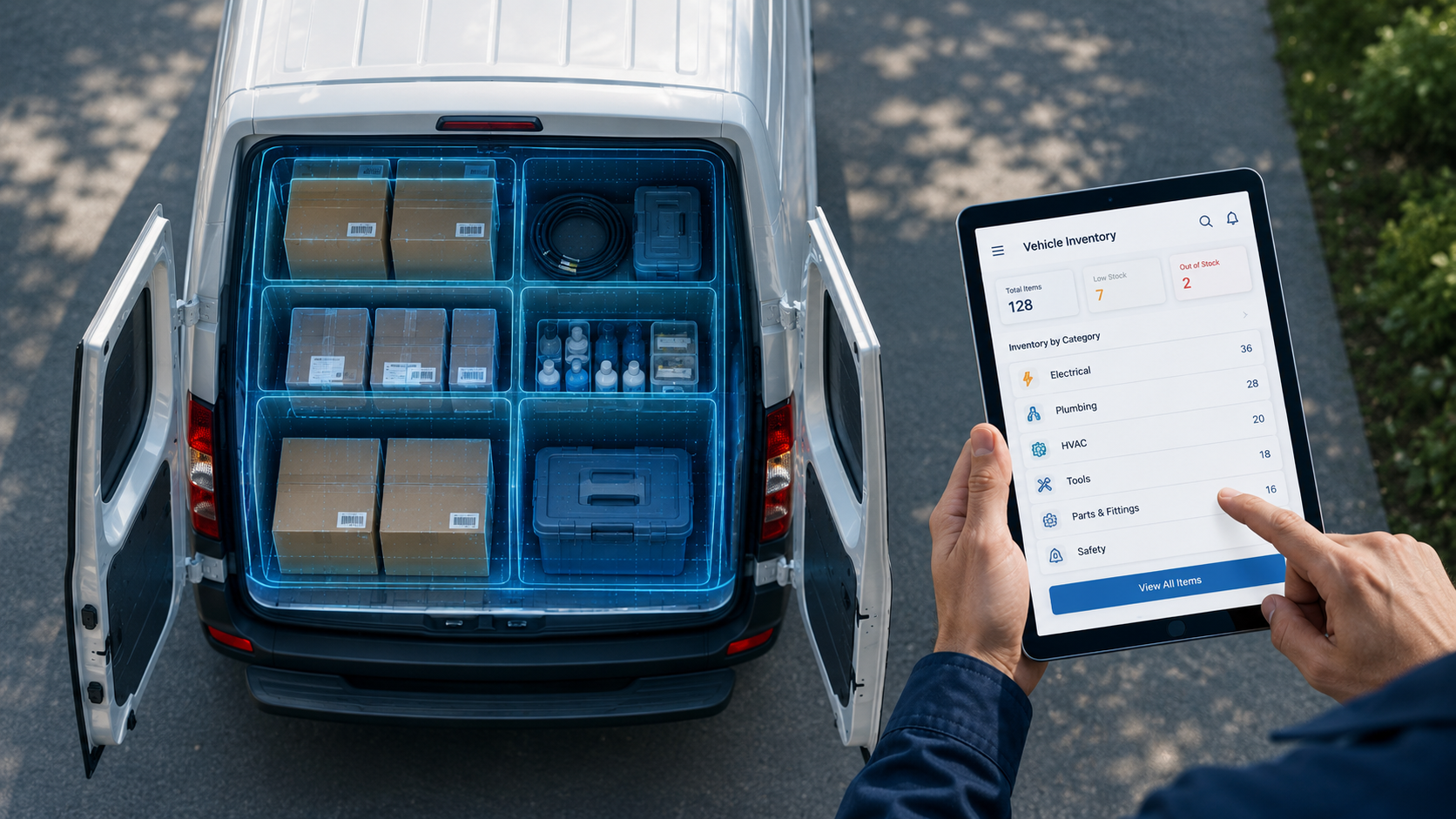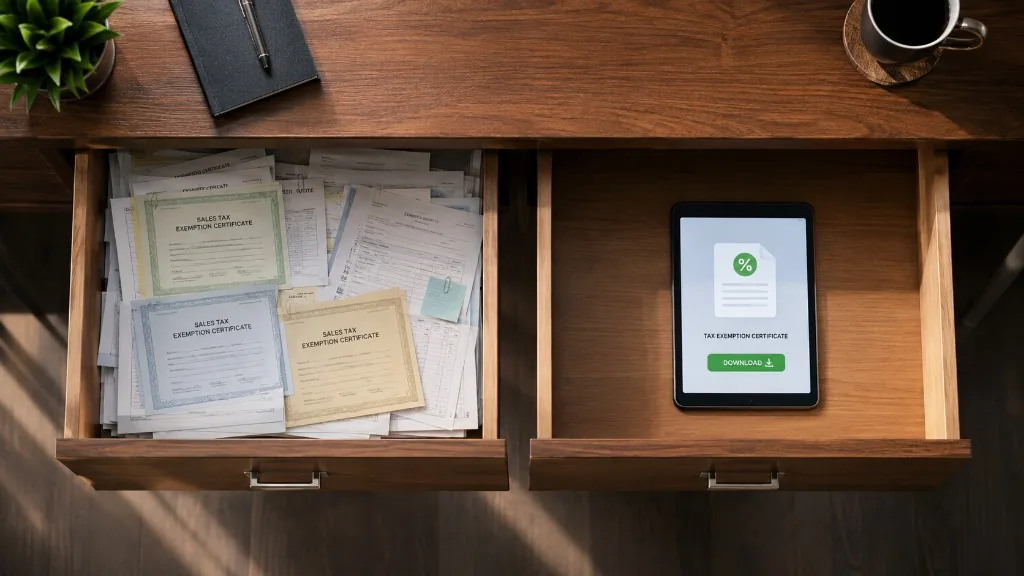
Most distribution problems start in the warehouse. Missed deliveries, short orders, and inventory surprises often trace back to a single picking error or outdated stock count. Yet many distribution teams still treat warehouse management as a back-room function. They are pretty much the control center for inventory accuracy, delivery performance, and operational efficiency.
This guide breaks down what warehouse management really is, how most warehouses operate today, where inefficiencies creep in, and how modern warehouse management systems (WMS) are transforming distribution. We’ll also explore how bMobile connects warehouse management directly to inventory, routing, and delivery to create a fully synchronized operation.
By the end, you’ll have a clear understanding of why warehouse management is no longer just a back-room function and how improving it unlocks speed, accuracy, and scalability across your entire business.
What is warehouse management?
At its core, warehouse management is the process of controlling and optimizing how inventory is received, stored, picked, packed, and loaded for delivery.
But modern warehouse management goes far beyond tracking where products sit on a shelf. Effective warehouse management answers critical operational questions in real time, like:
- What inventory is actually available right now?
- Where is each product located?
- What needs to be picked, in what order, and by whom?
- What’s ready to ship and what isn’t?
- How does today’s warehouse activity impact routes, deliveries, and customers?
When warehouse management works well, the warehouse becomes a predictable, highly efficient engine.
Why warehouse management is the backbone of distribution
Warehouse management sits at the intersection of inventory accuracy, labor efficiency, and customer service. Every order that goes out the door depends on the warehouse doing three things correctly:
- Picking the right product
- Picking the right quantity
- Getting it loaded on time
If any of these break down, all aspects, from routes and drivers to customers, are affected, and the office must address issues after the fact. This is why warehouse management isn’t just an internal concern. Because it directly affects:
- Delivery accuracy
- Route efficiency
- Inventory planning
- Customer satisfaction
- Operating costs
In modern distribution, warehouse management isn’t a support function, but a competitive advantage.
How warehouse management typically works today (and where it breaks down)
In many distribution businesses, warehouse management still relies on a mix of disconnected systems and manual processes. Inventory typically lives in an ERP or inventory system, while orders arrive as printed pick tickets or static digital files. Warehouse staff pick items from these documents, make manual adjustments when discrepancies occur, and stage loads for delivery.
This disconnect creates common problems:
- Inventory counts that don’t match reality
- Pickers discovering shortages mid-pick
- Orders being short-loaded or over-picked
- Congestion at staging areas
- Last-minute changes that don’t reach the warehouse
- Drivers waiting while issues are resolved
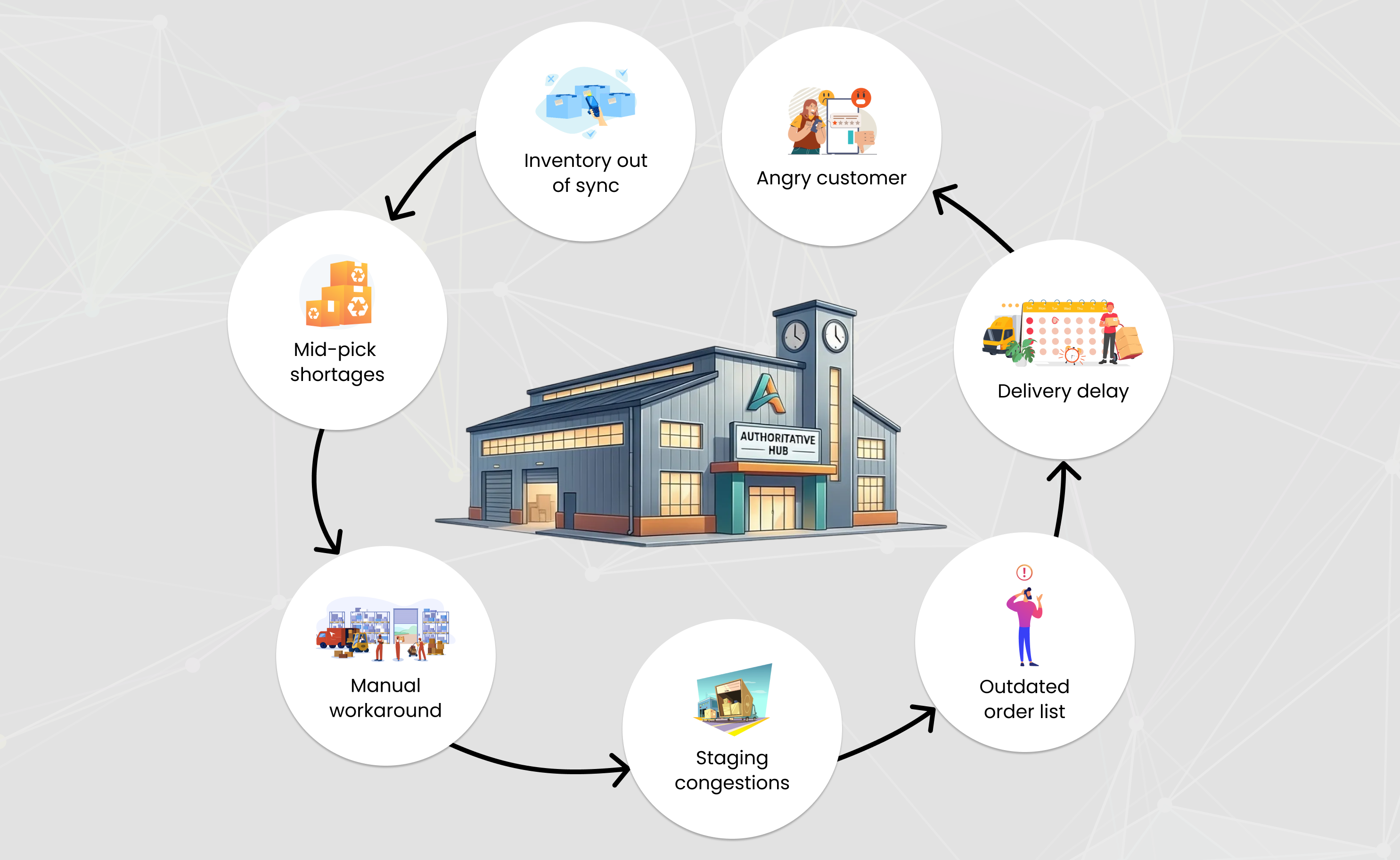
Individually, these issues may seem minor, but together they slow operations, introduce errors, and force teams to rely on workarounds instead of trusting their systems. At low volume, experienced staff can compensate, but the system depends heavily on people filling the gaps.
How warehouse management connects to routing and delivery
Warehouse management is the foundation for every route and delivery. Every pick, scan, and load confirmation updates inventory in real time. Routing systems rely on that accurate, up-to-date inventory to plan stops, assign loads, and optimize routes. When warehouse data is accurate and immediate, dispatch can build routes based on confirmed loads, trucks leave on time, and drivers follow optimized schedules with fewer exceptions.
In short, warehouse management and routing operate as one connected workflow. To utilize this connection to the maximum potential, you will need a warehouse management system (WMS).
What is a warehouse management system (WMS)?
A warehouse management system (WMS) is a software that helps you coordinate and control how work gets done inside the warehouse in real time. It connects inventory data, warehouse labor, and order execution so every movement is tracked, validated, and reflected across the business as it happens. As order volume, SKUs, and routes increase, a WMS allows operations to scale without relying on manual checks or tribal knowledge to maintain accuracy.
Instead of relying on static documents and delayed updates, a modern WMS provides a live view of warehouse activity and enforces consistent workflows from receiving through loading.
A modern WMS warehouse management system provides:
- Real-time inventory visibility
- Digital pick lists and workflows
- Barcode scanning and validation
- Location tracking
- Staging and loading control
- Live updates across the operation
As order volume, SKUs, and routes increase, WMS like bMobile allows operations to scale without relying on manual checks or worker experience to maintain accuracy.
How bMobile approaches warehouse management
bMobile connects warehouse operations directly to inventory, routing, and delivery, turning disconnected processes into a single synchronized workflow. Instead of treating the warehouse as a separate module, bMobile integrates inventory management, warehouse workflows, route optimization, dispatch, delivery management, and proof of delivery into one seamless platform.
Warehouse scans update inventory instantly, pick confirmations feed directly into route planning, and drivers leave with verified, accurate loads. Proof of delivery closes the loop by updating inventory and orders in real time, eliminating gaps that cause delays, errors, and rework.
With everything connected, distribution teams see
- higher pick accuracy
- faster warehouse throughput
- real-time inventory visibility
- smoother route execution
- lower labor costs
- scalable operations
With WMS like bMobile, warehouse management stops being a daily firefight and becomes a predictable, measurable process that improves your end-to-end operational efficiency.
If you’re ready to take control of your warehouse and turn it into a strategic advantage, check out how bMobile can streamline your operations.
Request a Demo