If you think you are losing revenue to inventory errors, delayed shipments, or inefficient warehouse processes, you're not alone. According to recent industry data, warehouses lose an average of $1.1 trillion annually due to poor inventory management and operational inefficiencies.
But today's warehouses are no longer considered simple storage facilities. They're strategic hubs that directly impact customer satisfaction, profitability, and competitive advantage. That is why a cutting-edge Warehouse Management System (WMS) like bMobile has evolved from a nice-to-have luxury to an absolute business necessity.
In 2026, the right WMS transforms your entire operation into an intelligent, adaptive ecosystem that responds to market demands in real-time. Let's explore the ten features and functionalities that separate industry leaders from those struggling to keep pace.
Top 10 features of a warehouse management system in 2026
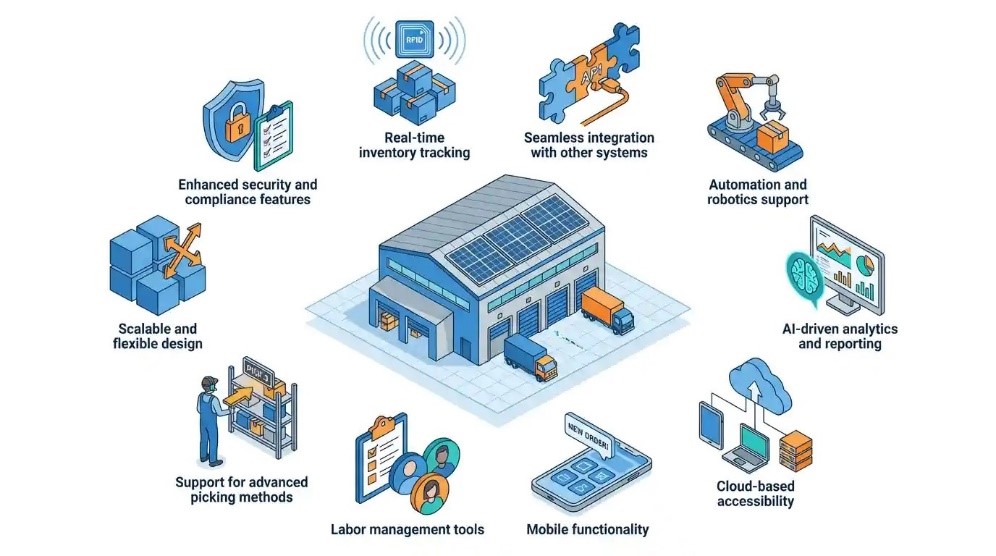
1. Real-Time Inventory Tracking
Imagine having a live view of your inventory at any moment. Real-time tracking provides this visibility, ensuring accurate stock levels and locations. This minimizes errors, prevents overstocking, and streamlines order fulfillment.
Businesses leveraging real-time tracking have reported up to a 30% reduction in inventory holding costs.
Additionally, it ensures faster decision-making, helping you stay agile during peak demand. This capability gives businesses a competitive edge by allowing them to react instantly to changing market needs.
2. Seamless Integration with Other Systems
Your WMS should be the central hub connecting various systems like ERP, order management software, and transportation management. Seamless integration ensures smooth data flow, reducing manual interventions and enhancing overall efficiency. Open APIs provide the flexibility to adapt as your tech ecosystem evolves. Integrated systems also enable unified reporting, offering a holistic view of your operations from procurement to delivery. Without this, businesses often face data silos, leading to errors and operational delays, which can negatively impact customer satisfaction and profitability.
3. Automation and Robotics Support
Integrating your WMS with automation tools, such as autonomous mobile robots (AMRs), reduces manual labor and accelerates processes. These technologies handle repetitive tasks like picking, packing, and sorting, allowing your workforce to focus on more strategic roles.
Companies adopting robotic picking systems have seen a 40% increase in order accuracy and a 50% reduction in processing time.
As robotics become more affordable, even mid-sized businesses are adopting these technologies to stay competitive, demonstrating their growing role in modern warehousing.
4. AI-Driven Analytics and Reporting
A WMS equipped with AI-powered analytics can uncover trends, predict demand, and optimize operations. Dashboards offering actionable insights empower data-driven decisions, from stocking strategies to staffing levels. Additionally, AI can predict equipment maintenance needs, preventing costly downtime and ensuring uninterrupted operations.
AI can optimize warehouse layouts, reducing travel time and improving worker productivity by up to 25%.
5. Cloud-Based Accessibility
Cloud-based WMS solutions allow access to warehouse operations from anywhere, supporting multiple locations and remote management. They also facilitate quick updates and lower upfront costs compared to on-premises systems. Cloud solutions ensure scalability as your business grows, making them a future-proof investment.
A recent Gartner study predicts that over 85% of WMS deployments will be cloud-based by 2026, a testament to their growing importance in a fast-paced world.
6. Mobile Functionality
An empowered team with a mobile-friendly WMS can access information, scan barcodes, and update statuses directly from the warehouse floor. This real-time capability eliminates delays and boosts operational efficiency.
Implementing mobile functionality can improve picking speed by up to 25%.
Features like voice-guided picking further enhance efficiency by reducing errors and cutting down training time for new employees. In fast-moving environments, mobile tools can be the difference between meeting deadlines and falling behind.
7. Labor Management Tools
Labor is a significant cost. Effective labor management within your WMS tracks productivity, identifies bottlenecks, and allocates resources efficiently. Features like task prioritization and performance dashboards enhance overall efficiency.
Real-time labor tracking combined with predictive analytics can help plan shifts better, reducing overtime costs by more than 42%.
Additionally, some WMS platforms incorporate gamification tools to motivate workers and create a more engaged workforce, fostering productivity in the long run.
8. Support for Advanced Picking Methods
Your WMS should support methods like zone picking, wave picking, and batch picking to streamline workflows and reduce order fulfillment time, especially during peak periods.
Optimized batch picking can decrease travel time by up to 30%.
Advanced picking methods can also reduce workforce fatigue, increasing overall productivity. During high-demand seasons, wave picking prioritizes urgent orders without disrupting regular workflows, ensuring efficiency across the board.
9. Scalable and Flexible Design
A scalable WMS grows with you, accommodating new products or distribution centers. Flexible systems allow easy customization to meet unique business needs. Choosing a modular WMS lets you add or remove features as required, ensuring adaptability.
Scalability also reduces the need for costly overhauls when the business grows.
This allows businesses to invest resources in other areas of growth while maintaining operational continuity.
10. Enhanced Security and Compliance Features
A robust WMS should offer advanced security measures like encryption and multi-factor authentication, along with regular updates to meet regulatory standards.
Ensuring compliance with industry regulations safeguards your operations and maintains customer trust.
For industries dealing with perishable goods or sensitive materials, compliance features like tracking temperature logs and expiration dates are critical. Security breaches or compliance failures can lead to significant financial losses and reputational damage, making this feature non-negotiable.
Also read: How to Choose the Right Warehouse Management Software
Why These Warehouse Management System Features Matter
The warehouse landscape of 2026 is dynamic and tech-driven. A WMS encompassing these features enhances efficiency and also positions your operations to tackle challenges like labor shortages and supply chain disruptions effectively.
With an optimized WMS system like bMobile , which are built with this future in mind, you can meet customer expectations, adapt to market demands, and create a competitive advantage. These features transform a warehouse into a strategic asset, driving growth, profitability, and customer loyalty.
Selecting the right WMS is a strategic move for your business's future. You can use this guide to identify a system that meets current demands and adapts to upcoming challenges.
Are you ready to transform your warehouse into a high-efficiency, tech-powered operation?
Book a Demo