

AI in DSD
What Is Real, What Is Noise, and What Actually Matters for Your Operation.
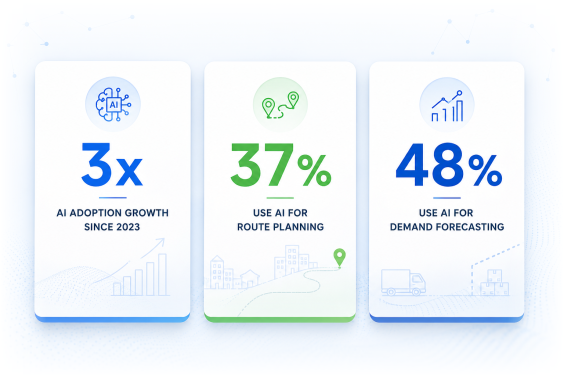
The IFDA 2025 Foodservice Distribution Industry Tech Report shows that AI adoption among distributors has tripled. About a third are using some form of AI now, compared to just 12% in 2023.
But here is what doesn't make the headlines: The results are super mixed.
Most distributors are using AI for basic ecommerce and office task automation. Around half use it for customer service or demand forecasting. Only 37% touch it for route planning, and almost nobody is using it in the warehouse or for predictive maintenance.
That gap between hype and actual results is the real story here. AI isn't brand new to distribution, but everyone is feeling the pressure to figure out what actually makes money versus what just sounds cool on a sales deck.
So let's break down where AI is actually useful in DSD today, where it's still just marketing talk, and what you should fix before buying anything.
Stats at a glance
Where AI works in DSD (and where it fails)
If you run a 10-truck bakery route or a 30-driver snack setup, AI can sound like something built only for giant corporations. But a few features are already paying off for operations your size.
- Spotting demand trends early: This is where AI pays for itself the fastest. It doesn't just look at last week's order. It looks across months of history, flags accounts that are slipping, and catches stuff like a store whose Tuesday order dropped three weeks straight. For perishable goods, catching that early is the difference between a clean sale and throwing product in the trash.
- Route sequencing: Smarter routing isn't just finding the shortest path. It factors in stop windows, truck weights, historical time per stop, and time-of-day traffic. One regional distributor cut total mileage by 18% using this. On tight margins, that savings goes straight to your pocket.
- Where AI is still falling short: Warehouse ops and predictive maintenance. The data backs this up because adoption here is super low. It's not that AI can't help, it's that most mid-sized distributors don't have clean, connected data. AI is only as smart as what you feed it. If your inventory counts live in one tool and your pick-pack data lives in another, AI has nothing to work with.
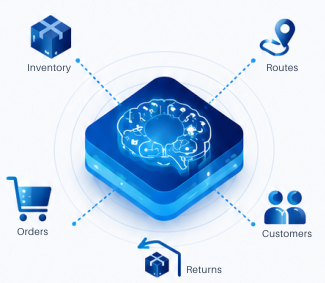
Bottom line: AI works when your core business is already digitized and connected in one place. If your routes, orders, inventory, and customer info already talk to each other, AI finds stuff you'd miss manually. If they don't talk to each other, don't buy AI yet. Fix your integration first.
What AI can and cannot do for DSD today


Almost every distributor asks me the same thing lately:
"Should we be doing something with AI?"
My usual answer is:
"You probably already are, you just don't call it that."
When your software suggests reorder quantities based on account history, that's AI. When your route planner tweaks stop sequences based on traffic patterns, that's machine learning. When the system flags a spike in returns before your sales rep even notices, that's pattern recognition. These aren't futuristic ideas, they're basic features good DSD software already handles.

What's Changing

AI is getting specific to DSD
Early tools were built for generic retail or broad logistics. Now we have systems built for the actual flow of a bakery or dairy route. Standard AI doesn't know that a missed Monday bread delivery is completely different from a missed Friday snack delivery, but DSD-focused models do.

Data quality is the bottleneck
The IFDA report shows mixed results because most companies have messy data. Clean, connected data gets you useful results. Juggling four different systems gets you useless noise.

Smaller operators actually have an advantage
A 15-truck fleet running bMobile usually has tighter, more consistent data than a national giant running 500 trucks. AI loves clear, repeated patterns. A focused network with 200 accounts and 10 drivers gives AI perfect data to work with. You don't need to be huge, you just need to be connected.

My advice for ops leaders
Ask yourself one question: "Are my orders, inventory, routes, and customer data flowing through one single connected system right now?"
If no, fix that first. AI without clean data is just an expensive guessing tool. If yes, you're closer than you think, and the right system will start showing you insights you've been missing out on.
Quick reads to check out

How Truck Route Planning Software Avoids Costly Delays
A look at how cutting re-runs and dead miles sets the foundation for smart routing.
READ MORE →
How Real-Time Inventory Tracking Saves Bakeries Time and Money
How live inventory tracking gives AI the clean data it needs to predict demand.
READ MORE →
How Snack and Beverage Distributors Stay Competitive
How modern DSD teams are building practical tech setups that go beyond basic delivery logs.
READ MORE →Thanks for reading this issue.
If this got you thinking, pass it along to your ops manager or tech partner. Good decisions start with asking the right operational questions, not listening to sales pitches.
Keep your data connected, your routes tight, and your decisions simple.